
Medisure Logo
+1 (951) 622-8126
info@medisuresolution.com
Medisure Logo
24/7 Managed IT Services24/7 IT Help DeskPatient Intake SupportRemote Monitoring and AlertingIncident ResponseTicket EscalationSLA Management
EHR Support ServicesCerner SupportAthena EHR SupporteClinicalWorks Support
EHR Integration ServicesCerner EHR IntegrationCustom HL7 / FHIR Interfaces
Network Management ServicesNetwork Monitoring and ManagementProactive IT SupportNetwork OptimizationPerformance Tuning
Infrastructure Management ServicesEnd to End Infrastructure ManagementEnterprise Operations Management (EOM)Process Improvements and Automation
Server Support ServicesServer TroubleshootingServer AdministrationServer SecurityServer Hardening
Server Management ServicesServer VirtualizationProactive Server MonitoringBackup SolutionsDisaster Recovery Management ServicesServices Optimization
IndustriesHospitalsMedical CentersMedical LaboratoriesPharmaceutical and Biotech CompaniesHealthcare Product Companies
Healthcare StartupsOrthopedic CentersPharmacy Chains & Specialty PharmaciesDigital Health & Wearable-Tech Startups
Legacy Migration & Extraction ServicesLegacy System Data ExtractionEHR to EHR Data MigrationCloud Migration StrategyData Quality and ValidationPost Migration Analytics
AI ProductsSealsVaultAISHASealsForgeOryxBlue HRMTurbo Owl
About UsContact UsLeadershipResourcesLocationsOur Services
24/7 Managed IT Services
24/7 IT Help DeskPatient Intake SupportRemote Monitoring and AlertingIncident ResponseTicket EscalationSLA Management
EHR Support Services
Cerner SupportAthena EHR SupporteClinicalWorks Support
EHR Integration Services
Cerner EHR IntegrationCustom HL7 / FHIR Interfaces
Network Management Services
Network Monitoring and ManagementProactive IT SupportNetwork OptimizationPerformance Tuning
Infrastructure Management Services
End to End Infrastructure ManagementEnterprise Operations Management (EOM)Process Improvements and Automation
Server Support Services
Server TroubleshootingServer AdministrationServer SecurityServer Hardening
Server Management Services
Server VirtualizationProactive Server MonitoringBackup SolutionsDisaster Recovery Management ServicesServices Optimization
Industries
HospitalsMedical CentersMedical LaboratoriesPharmaceutical and Biotech CompaniesHealthcare Product Companies
Healthcare StartupsOrthopedic CentersPharmacy Chains & Specialty PharmaciesDigital Health & Wearable-Tech Startups

Legacy Migration & Extraction

Legacy Migration & Extraction ServicesLegacy System Data ExtractionEHR to EHR Data MigrationCloud Migration StrategyData Quality and ValidationPost Migration Analytics

AI Products

AI ProductsSealsVaultAISHASealsForgeOryxBlue HRMTurbo Owl

Company

About UsContact UsLeadershipResourcesLocationsOur Services
Medisure Logo

We support healthcare organizations with secure, reliable IT services that reduce downtime and streamline operations. Our goal is to help care teams focus fully on their patients, not technical issues.

+1 (951) 622-8126
info@medisuresolution.com
Available Nationwide

Services

  • 24/7 Managed IT
  • EHR Support
  • Network Management
  • Server Management
  • Legacy Migration

Industries

  • Hospitals
  • Medical Centers
  • Laboratories
  • Pharma & Biotech
  • Healthcare Startups
  • Specialty Practices

AI Products & Company

AI Products

  • SealsVault
  • AISHA
  • SealsForge
  • OryxBlue

Company

  • About Us
  • Leadership
  • Locations
  • Resources
  • Contact
© 2026 MediSure Solution.
Privacy Policy|Terms & Conditions
Cloud Migration Strategy Services Banner

Cloud
Migration Strategy Services

Plan the move, avoid surprises.

Your cloud move should feel clear, not risky. Our cloud migration strategy services map what to move first, how to protect data, and how to keep systems running during the change.

Request Cloud Migration Now

Overview

A good plan starts with your apps, your data, and your risk limits. These cloud migration strategy services define scope, timelines, security controls, and success checks before anyone touches production. You also get a cloud migration approach that fits healthcare needs, including access control, audit readiness, and downtime planning.

Types of Cloud Migration Strategies

Different systems need different moves. This is where the “best” plan becomes the right plan for your environment. These are common types of cloud migration strategies teams use when moving from on-premises systems to the cloud.

Rehost

Lift & Shift
What It Means

Move the workload as is, then tune after the move

Best Fit For

Fast timeline, low change tolerance

Replatform

Optimize & Move
What It Means

Make small platform changes, keep core app logic the same

Best Fit For

Quick gains without a rebuild

Refactor

Re-architect
What It Means

Change app parts to fit cloud patterns

Best Fit For

Long-term improvement goals

Repurchase

Replace with SaaS
What It Means

Replace the current system with a SaaS tool, then migrate data

Best Fit For

Retiring legacy software

Retire

Decommission
What It Means

Shut down systems that no longer provide value

Best Fit For

Reducing cost and sprawl

Retain

Keep In Place
What It Means

Keep a system where it is for now

Best Fit For

High-risk systems or tight constraints

Moving to the Cloud Strategy

A move to the cloud strategy should answer a few simple questions. If you can't answer them, the project drifts.

What stays, what moves, what gets replaced

What success looks like: speed, uptime, cost, security

What order do the systems move in, based on dependencies

What data needs extra controls, PHI, audit logs, and access rules

What the cutover plan is, who approves, and how rollback works
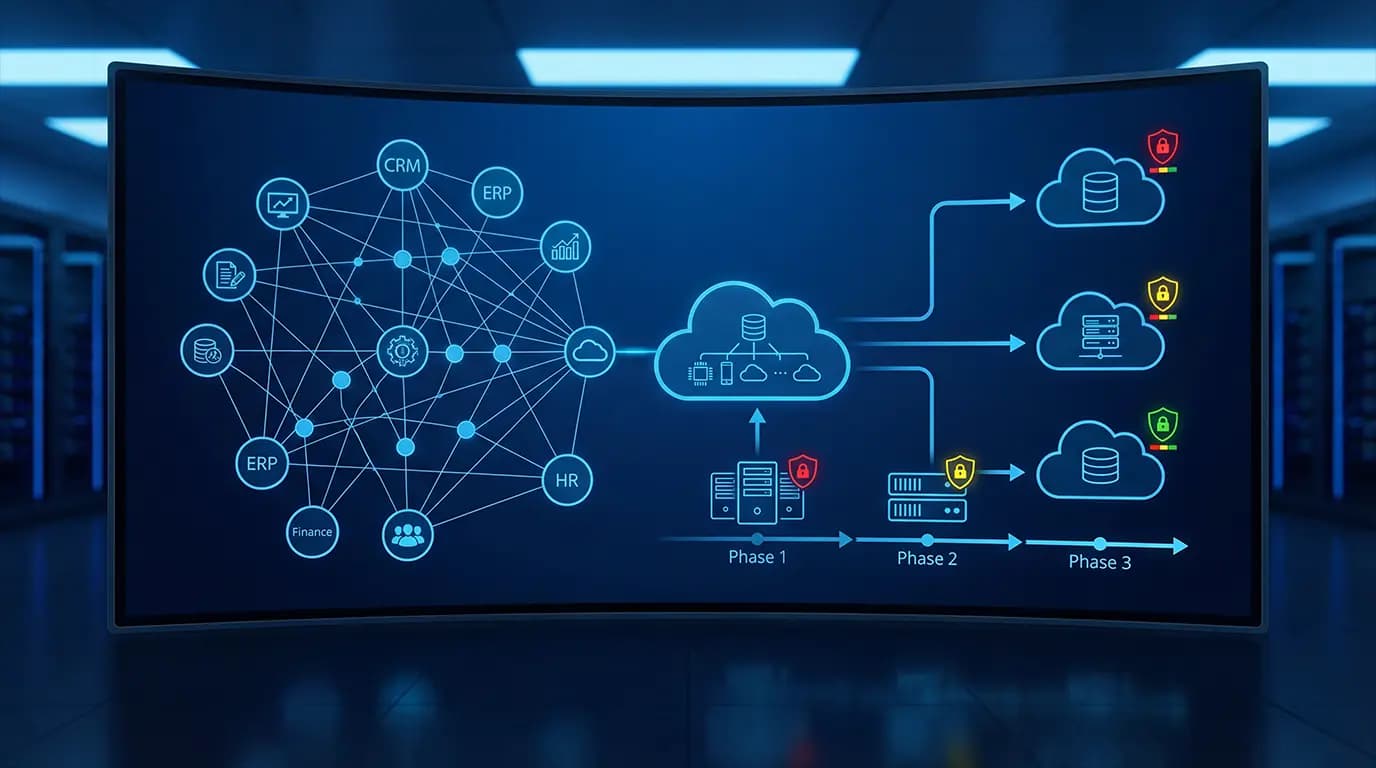
Moving to the Cloud Strategy

This keeps your cloud migration strategy grounded and easy to run.

AWS and Azure Strategy Paths

Different clouds have different guardrails and patterns. Your plan should match the platform you use.

AWS Migration Strategy

Landing Zones & IAM Design

AWS migration strategies often focus on landing zones, IAM design, network segmentation, and service selection for compute and storage.

Logging, Monitoring & Encryption

An AWS cloud migration strategy also needs clear choices for logging, monitoring, encryption, and backup patterns.

Azure Migration Strategy

Subscriptions & Identity

An Azure migration strategy often centers on subscriptions, resource groups, identity with Entra ID, and policy controls.

Governance & Network Design

An Azure cloud migration strategy should also define governance, network design, and workload placement across regions.

Migration Strategies from On-Premise to Cloud

This is the part most teams care about: what happens first, what happens next, and how risk stays controlled.

Plan

Define & Align
What We Do

Confirm scope, dependencies, risk limits, and success checks

What You Get

Approved cloud migration approach

Prepare

Build Foundation
What We Do

Set identity, network, logging, and access rules

What You Get

Ready cloud landing zone

Move

Execute Waves
What We Do

Run migration waves based on dependencies

What You Get

Predictable cutovers

Validate

Verify & Test
What We Do

Check performance, data, and real user workflows

What You Get

Proof workflows still work

Stabilize

Optimize & Run
What We Do

Tune, monitor, and run cost checks

What You Get

Steady operations after the move

Business Objectives and Success Criteria

Define clear, measurable outcomes that align cloud migration with your healthcare organization's strategic goals.

Cost Reduction

Reduce infrastructure costs by 30-40% through optimized resource allocation and cloud-native services

TCO AnalysisROI ProjectionsCost Monitoring

Scalability & Performance

Enable elastic scaling and improved performance to handle varying healthcare workloads

Auto-scaling PoliciesPerformance BaselinesCapacity Planning

Security & Compliance

Enhance security posture while maintaining Supporting HIPAA Compliance and data protection standards

Security AssessmentsCompliance AuditsRisk Mitigation

Business Continuity

Improve disaster recovery capabilities and ensure 99.9% uptime for critical healthcare systems

RTO/RPO TargetsBackup ValidationFailover Testing

Success Measurement Framework

Track the metrics that matter most to validate your cloud migration outcomes.

Performance KPIs

Tracking
Application response time
System availability
User satisfaction scores
Incident resolution time

Financial Metrics

Cost Control
Total cost of ownership
Operational cost reduction
Resource utilization rates
ROI achievement timeline

Compliance Metrics

Governance
HIPAA audit results
Security incident count
Data breach prevention
Regulatory compliance score

Current State Discovery

Comprehensive assessment of your existing infrastructure, workloads, dependencies, licensing, and costs to inform migration strategy.

Workload Analysis

  • Application inventory and dependencies
  • Performance baselines and resource utilization
  • Integration points and data flows
  • Business criticality and availability requirements

Infrastructure Assessment

  • Server specifications and capacity
  • Network topology and bandwidth
  • Storage systems and data volumes
  • Security controls and access patterns

Licensing & Costs

  • Software license inventory and terms
  • Current infrastructure costs
  • Support and maintenance contracts
  • Vendor relationship analysis

Dependencies Mapping

  • Application interdependencies
  • Database relationships
  • External system integrations
  • User access patterns and workflows

Discovery Deliverables

Comprehensive documentation package including current state assessment, migration readiness report, and detailed recommendations.

Infrastructure InventoryDependency MapsCost AnalysisRisk Assessment

Discovery Process & Timeline

A structured approach to understanding your current environment before migration begins.

1

Planning

Scope definition and tool deployment

Week 1
2

Data Collection

Automated discovery and manual assessment

Weeks 2-3
3

Analysis

Data analysis and dependency mapping

Week 4
4

Reporting

Findings presentation and recommendations

Week 5

Target Architecture Design

Design secure, scalable cloud architecture with proper landing zones, network segmentation, security boundaries, and identity management.

Landing Zones

Pre-configured, secure environments for workload deployment

Multi-account structureGovernance policiesBaseline securityNetwork isolation

Network Design

Secure, scalable network architecture with proper segmentation

VPC designSubnet planningSecurity groupsLoad balancing

Security Boundaries

Defense-in-depth security model with multiple protection layers

Encryption at rest/transitAccess controlsMonitoringCompliance frameworks

Identity & Access

Centralized identity management with role-based access control

Single sign-onMulti-factor authRole definitionsPrivilege management

Multi-Cloud Strategy

Leverage multiple cloud providers for redundancy, cost optimization, and vendor independence.

Hybrid Architecture

Seamless integration between on-premises and cloud environments for gradual migration.

Microservices Design

Containerized, scalable architecture enabling independent service deployment and scaling.
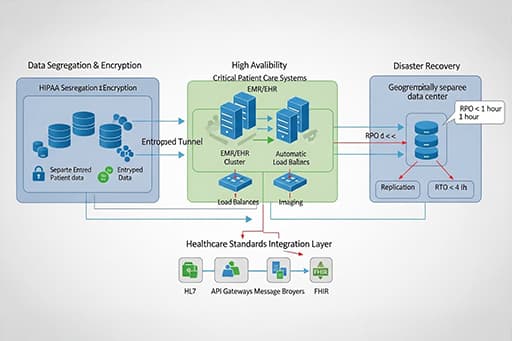
Healthcare-Specific Architecture Considerations

  • Supporting HIPAA Compliance data segregation and encryption
  • High availability for critical patient care systems
  • Disaster recovery with RPO/RTO requirements
  • Integration with healthcare standards (HL7, FHIR)
Healthcare Cloud Architecture

Migration Approach & Decision Matrix

Choose the right migration strategy for each workload: rehost, refactor, replatform, or retire based on business requirements and technical constraints.

Rehost (Lift & Shift)

Move applications to cloud with minimal changes

2-4 weeksLowLow
  • Quick migration
  • Minimal risk
  • Immediate cloud benefits
Legacy systemsTime-sensitive migrationsProof of concept

Replatform

Make targeted optimizations during migration

4-8 weeksMediumMedium
  • Performance gains
  • Cost optimization
  • Cloud-native features
Database migrationsWeb applicationsModerate optimization

Refactor

Redesign applications for cloud-native architecture

3-6 monthsHighHigh
  • Maximum optimization
  • Scalability
  • Innovation enablement
Critical applicationsScalability requirementsLong-term strategy

Retire

Decommission applications no longer needed

1-2 weeksLowVery Low
  • Cost reduction
  • Simplified architecture
  • Reduced maintenance
Redundant systemsEnd-of-life applicationsUnused services

Decision Matrix Framework

Criteria
Rehost
Replatform
Refactor
Retire
Migration Speed
Fast
Medium
Slow
Fastest
Migration Speed
RehostFast
ReplatformMedium
RefactorSlow
RetireFastest
Cost Optimization
Low
Medium
High
Highest
Cost Optimization
RehostLow
ReplatformMedium
RefactorHigh
RetireHighest
Technical Risk
Low
Medium
High
Lowest
Technical Risk
RehostLow
ReplatformMedium
RefactorHigh
RetireLowest
Future Scalability
Limited
Good
Excellent
N/A
Future Scalability
RehostLimited
ReplatformGood
RefactorExcellent
RetireN/A

Migration Strategy Recommendations

Our experts analyze each workload against multiple criteria to recommend the optimal migration approach, balancing speed, cost, risk, and long-term benefits.

Workload AssessmentRisk AnalysisCost-Benefit AnalysisTimeline Planning

Data Movement Plan

Comprehensive strategy for moving datasets with proper sequencing, bandwidth planning, and change freeze windows to ensure secure, efficient data migration.

Data Discovery

1-2 weeks
Data inventory and classification
Volume and growth analysis
Dependency mapping
Compliance requirements review

Sequencing Strategy

1 week
Migration wave planning
Dependency-based ordering
Risk assessment and mitigation
Rollback planning

Bandwidth Planning

1 week
Network capacity assessment
Transfer time calculations
Optimization strategies
Parallel transfer planning

Change Management

Ongoing
Freeze window scheduling
Stakeholder communication
Validation procedures
Go-live coordination

Data Transfer Methods & Optimization

Online Transfer

High-speed network transfer with compression and encryption for smaller datasets.

Up to 10 TB datasets
Real-time monitoring
Incremental sync
Bandwidth optimization

Offline Transfer

Physical device shipping for large datasets with secure handling and tracking.

10+ TB datasets
Encrypted devices
Chain of custody
Faster than network

Hybrid Approach

Combination of methods optimized for different data types and priorities.

Mixed dataset sizes
Priority-based routing
Cost optimization
Flexible scheduling

Migration Sequencing Priorities

Critical SystemsPriority 1
Patient Care ApplicationsPriority 2
Clinical Support SystemsPriority 3
Administrative SystemsPriority 4

Change Freeze Windows

Pre-Migration Freeze

48 hours before data transfer begins

Migration Window

During active data transfer and validation

Post-Migration Validation

24 hours after go-live for monitoring

Rollback Window

72 hours for potential rollback decisions

Data Movement Success Metrics

99.9%
Data Integrity
Zero
Data Loss Events
50%
Faster Transfer
24/7
Monitoring

Security and Compliance

Comprehensive security framework with encryption, access controls, and protected health information handling to ensure Supporting HIPAA Compliance throughout migration.

Encryption

End-to-end encryption for data protection

AES-256 encryption at rest
TLS 1.3 for data in transit
Key management and rotation
Hardware security modules

Access Controls

Identity and access management framework

Multi-factor authentication
Role-based access control
Privileged access management
Regular access reviews

PHI Handling

Protected health information safeguards

Data classification and labeling
Minimum necessary access
Audit logging and monitoring
Breach notification procedures

Compliance

Regulatory compliance frameworks

Supporting HIPAA Compliance validation
Regular compliance audits
Documentation and evidence

Supporting HIPAA Compliance Framework

Administrative Safeguards

Security officer designation
Workforce training programs
Access management procedures
Incident response plans

Technical Safeguards

Access control systems
Audit controls and logging
Data integrity controls
Transmission security

Physical Safeguards

Facility access controls
Workstation security
Device and media controls
Environmental protections

Security Monitoring & Response

Real-time Threat Detection

24/7 monitoring with automated threat detection and response

Continuous Monitoring

Comprehensive logging and audit trail maintenance

Incident Response

Rapid response team with defined escalation procedures

Compliance Validation

HIPAA Assessment
Quarterly

Full compliance posture evaluation against HIPAA standards

Security Audits
Annual

Comprehensive review of security controls and policies

Penetration Testing
Bi-annual

Simulated attacks to identify exploitable vulnerabilities

Vulnerability Scans
Monthly

Automated scanning for known security weaknesses

Zero-Breach Migration Record

  • 200+ healthcare migrations with zero security incidents
  • 100% Supporting HIPAA Compliance validation success rate
  • 24/7 security operations center monitoring
Security and Compliance Framework

Resilience and Business Continuity

Comprehensive backup strategy, disaster recovery objectives, and failover testing to ensure continuous healthcare operations with minimal downtime.

Backup Strategy

Multi-tier backup approach with automated scheduling and validation

RTO: < 4 hoursRPO: < 1 hour
Automated daily backups
Point-in-time recovery
Cross-region replication
Backup integrity testing

Disaster Recovery

Comprehensive DR plan with defined objectives and procedures

RTO: < 2 hoursRPO: < 15 minutes
Hot standby environments
Automated failover
Recovery orchestration
Regular DR testing

High Availability

Multi-zone deployment with load balancing and redundancy

RTO: < 5 minutesRPO: Real-time
Multi-AZ deployment
Load balancing
Auto-scaling groups
Health monitoring

Failover Testing

Regular testing to validate recovery procedures and objectives

RTO: ValidatedRPO: Validated
Quarterly DR drills
Automated test scenarios
Performance validation
Documentation updates

Business Continuity Framework

Risk Assessment

Identify potential threats and vulnerabilities that could impact healthcare operations.

Step 1

Recovery Planning

Develop detailed procedures for system recovery and business resumption.

Step 2

Testing & Validation

Regular testing to ensure recovery procedures work as expected.

Step 3

Continuous Improvement

Regular updates and improvements based on testing results and lessons learned.

Step 4

Recovery Time Objectives (RTO)

Critical Patient CareCritical
< 5 min
Clinical ApplicationsHigh
< 2 hrs
Administrative SystemsMedium
< 4 hrs
Reporting & AnalyticsStandard
< 24 hrs

Recovery Point Objectives (RPO)

Patient RecordsCritical
Real-time
Clinical DataHigh
< 15 min
Financial DataMedium
< 1 hr
Historical ReportsStandard
< 24 hrs

Proven Business Continuity Results

99.99%
Uptime Achievement
< 2 min
Average RTO
Zero
Data Loss Events
100%
DR Test Success

Operations and Handover

Comprehensive operational setup with monitoring, logging, runbooks, and clearly defined roles and responsibilities for seamless post-migration operations.

Monitoring & Alerting

Comprehensive monitoring setup with proactive alerting

Dashboard configurationAlert policy setupEscalation proceduresPerformance baselines

Logging & Auditing

Centralized logging with audit trail capabilities

Log aggregation setupRetention policiesAudit trail configurationCompliance reporting

Runbooks & Procedures

Detailed operational procedures and troubleshooting guides

Standard operating proceduresTroubleshooting guidesEmergency proceduresChange management process

Roles & Responsibilities

Clear definition of operational roles and accountability

RACI matrixContact directoriesEscalation pathsTraining materials

Operational Readiness Framework

1

Knowledge Transfer

Comprehensive training and documentation handover

2

Tool Configuration

Setup and configuration of operational tools

3

Process Validation

Testing and validation of operational procedures

4

Go-Live Support

Extended support during transition period

Operational Excellence Results

99.9%
System Uptime
< 15 min
Mean Resolution Time
24/7
Monitoring Coverage
100%
SLA Compliance

Cost Management and Optimization

Comprehensive cost optimization strategies with budgets, tagging, and continuous monitoring to maximize cloud ROI and minimize waste.

Save25-35%

Resource Right-Sizing

Optimize compute and storage resources based on actual usage

CPU and memory optimization
Storage tier optimization
Instance type recommendations
Auto-scaling configuration
Save30-50%

Reserved Capacity

Leverage reserved instances and savings plans for predictable workloads

Reserved instance planning
Savings plan optimization
Commitment analysis
Usage forecasting
Save40-60%

Automated Scheduling

Schedule non-production resources to run only when needed

Development environment scheduling
Test environment automation
Backup optimization
Idle resource detection
Save15-25%

Cost Monitoring

Continuous monitoring and alerting for cost anomalies

Budget alerts and thresholds
Cost anomaly detection
Departmental chargeback
Regular cost reviews

Cost Governance Framework

Tagging Strategy

Comprehensive resource tagging for cost allocation and tracking across departments and projects.

Department allocation
Project tracking
Environment classification
Owner identification

Budget Management

Proactive budget monitoring with alerts and automated actions to prevent cost overruns.

Monthly budget limits
Threshold alerts
Automated shutdowns
Approval workflows

Cost Reporting

Regular cost analysis and reporting with actionable insights for continuous optimization.

Weekly cost reviews
Trend analysis
Optimization recommendations
Executive dashboards

Cost Optimization Timeline

Immediate
0-30 days

Right-sizing, unused resource cleanup

15-25% savings
Short-term
1-3 months

Reserved capacity, scheduling automation

30-40% savings
Medium-term
3-6 months

Architecture optimization, modernization

40-50% savings
Long-term
6+ months

Cloud-native transformation, automation

50%+ savings

Cost Monitoring Tools

Real-time Dashboards
Automated Alerts
Cost Anomaly Detection
Optimization Recommendations

Proven Cost Optimization Results

40%
Average Cost Reduction
$2.5M
Annual Savings
6 months
ROI Payback
100%
Cost Visibility

Cloud Migration Best Practices

Here are cloud migration best practices that reduce bad surprises during execution.

Lock Identity & Access

Lock identity and access rules before moving production

Enable Audit Trails

Keep logs and audit trails on from day one

Move by Dependency Waves

Move by dependency waves, not by guesswork

Test Backups First

Test backups and restores before cutover

Validate Real Workflows

Validate real workflows, not just technical checks

Set Cost Alerts Early

Set cost alerts early, then review weekly

Keep a Rollback Plan

Keep a rollback plan for every critical cutover

These practices support cloud migration best practices and strengthen your cloud migration strategy services story.

Trusted Performance Across Healthcare

We keep your systems steady across teams and locations, so care workflows stay on track when it matters most.

24/7/365
Monitoring & Support
99.9%
System Uptime
Instant
Response Time
HIPAA
Compliant Infrastructure

Who We Support

MediSure Solution offers specialized healthcare IT services and support for a variety of industries, ensuring each sector's unique needs are met with secure, efficient, and compliant technology. Here's how we help:

Hospitals

Hospitals

Secure IT systems ensuring uptime, data safety, and smooth healthcare operations.

Medical Centers

Medical Centers

Modernizing IT systems for flexibility and reliability in patient care.

Medical Laboratories

Medical Laboratories

Faster, more reliable results with IT systems ensuring accuracy and compliance.

Pharmaceutical and Biotech Companies

Pharmaceutical and Biotech Companies

Intelligent IT systems for secure data, compliance, and global collaboration.

Healthcare Product Companies

Healthcare Product Companies

Enhancing security, improving workflows, and ensuring smooth operations.

Healthcare Startups

Healthcare Startups

Empowering startups with secure, efficient IT infrastructure.

Pharmacy Chains & Specialty Pharmacies

Pharmacy Chains & Specialty Pharmacies

Managing and securing critical IT systems for enhanced performance.
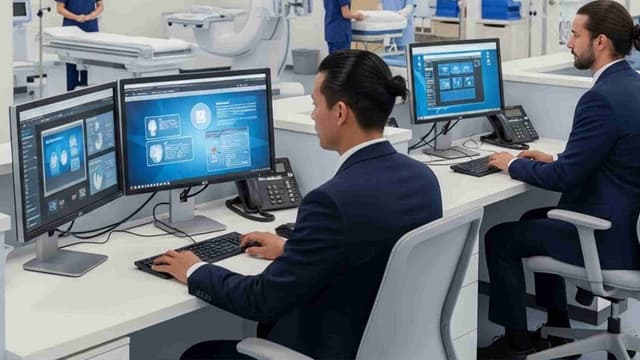
Orthopedic Centers

Orthopedic Centers

Optimizing IT systems to improve patient care and reliability.

Digital Health & Wearable-Tech Startups

Digital Health & Wearable-Tech Startups

Providing secure IT systems that drive innovation and support scalable growth.

Frequently Asked
Questions

Get answers to common questions about our cloud migration strategy services, planning approach, and execution support.

Our cloud migration strategy services cover discovery, dependency mapping, risk planning, cloud architecture choices, migration waves, and validation steps.

We review dependencies, data sensitivity, downtime limits, and change tolerance. Then we match the system to one of the different cloud migration strategies, like rehost or refactor.

Yes. We build AWS migration strategies and an Azure migration strategy based on your identity, network, logging, and governance needs.

Yes. We plan data flow checks, reconciliation, and workflow validation so records stay accurate when an EHR is involved. If you're moving records between platforms, EHR to EHR Data Migration fits this workflow.

Yes. Many moves start with cleaning and exporting data so the cloud build has the right inputs.

Yes. Many moves start with cleaning and exporting data so the cloud build has the right inputs.

Ready to Get Started?

If you want cloud migration strategy services that keep timelines clear and risk controlled, we’re ready to help.

Start Cloud Migration

Call us now: +1 (951) 622-8126