
Optimize and streamline your enterprise operations
Our enterprise operations management services improve efficiency, reduce costs, and ensure smooth day-to-day operations across your business.
Enterprise Operations Management (EOM) is a comprehensive framework that standardizes IT operations through documented runbooks, measurable Service Level Objectives (SLOs), and structured change governance. It transforms reactive IT support into proactive, predictable operations that align with business objectives and regulatory requirements in healthcare environments.
Comprehensive operational procedures covering system startup, shutdown, failover, patching, and emergency response scenarios.
Service Level Objectives that define performance targets, availability requirements, and response time commitments.
Structured change management processes with approval workflows, testing requirements, and rollback procedures.
Modern enterprises depend on a complex digital infrastructure that spans cloud infrastructure, on-prem infrastructure, hybrid environments, enterprise resource planning systems, and enterprise architecture layers. Without structured governance and monitoring, operations become reactive instead of predictable.
High incident volumes and recurring problem management failures
Slow Mean Time to Detect and Mean Time to Repair
Lack of observability across network operations and cloud operations
Poor change management governance leading to outages
Manual processes without workflow orchestration or automation
Compliance gaps in regulated industries such as healthcare IT operations and financial services IT
Our structured approach transforms fragmented IT operations into a cohesive, governed operational framework.
Our Enterprise Operations Management Services operate across five primary capability pillars:
Together, these capabilities create scalable enterprise resilience.
Faster incident resolution through standardized procedures
Documented processes for regulatory audits
Consistent operations regardless of staff changes
Measurable SLOs drive continuous improvement
Comprehensive Service Level Objectives defining performance targets and reliability commitments
Service | Availability | Response Time | Error Budget | Monitoring | Criticality |
|---|---|---|---|---|---|
EHR Application | 99.9% | < 2 seconds | 0.1% | Synthetic checks, APM | Critical |
Database Services | 99.95% | < 500ms | 0.05% | Query performance, connections | Critical |
Web Services | 99.5% | < 3 seconds | 0.5% | HTTP checks, load balancer | High |
File Storage | 99.9% | < 1 second | 0.1% | I/O metrics, capacity | High |
Backup Systems | 99.0% | N/A | 1.0% | Job completion, integrity | Medium |
Monitoring Stack | 99.5% | < 2 seconds | 0.5% | Self-monitoring, alerting | Medium |
Swipe or scroll horizontally to view full table
Comprehensive operational procedures for all critical system management tasks
Complete server boot sequence and service initialization
Graceful shutdown with data protection and service preservation
Application service restart with health verification
Automated and manual failover to standby systems
Return operations to primary systems after recovery
Dynamic pool management and traffic distribution
System patching with minimal disruption
Controlled configuration updates with validation
Resource scaling and performance optimization
Clear, sequential instructions with validation checkpoints
Built-in safety checks and rollback procedures
Clear roles and responsibilities for each procedure
Regular updates based on operational feedback
Structured change management with risk assessment and approval workflows
Critical security patches, system failures
Routine updates, configuration changes
Infrastructure upgrades, major releases
Pre-approved, low-risk changes
Detailed change request with risk assessment and implementation plan
Technical review, impact assessment, and stakeholder consultation
Multi-stakeholder approval process with conditions and requirements
Scheduled execution with monitoring and post-change review
Structured reporting schedule ensuring stakeholder awareness and continuous improvement
We differentiate through:
Deep expertise in healthcare IT operations and regulated industries
Structured ITIL-aligned governance model
Integrated security operations and compliance monitoring
Strong DevOps integration and Site Reliability Engineering practices
Enterprise-scale infrastructure management capabilities
Transparent Service-Level Objectives tracking
Enterprise operations consulting combined with managed services
Our approach bridges enterprise operations consulting with hands-on managed enterprise operations execution.
Our Enterprise Operations Management Services are designed for:
Hospitals & Clinics
Banks & Insurance
Distributed Networks
Corporate Infrastructure
Internal Operations
Compliance Focused
Each engagement is aligned with enterprise IT governance requirements and operational risk controls.
Verified metrics from authoritative sources with validation checks
Consistent delivery schedules with automated generation
Clear recommendations and trend analysis for decision making
Audit trail and documentation meeting regulatory requirements
We keep your systems steady across teams and locations, so care workflows stay on track when it matters most.
MediSure Solution offers specialized healthcare IT services and support for a variety of industries, ensuring each sector's unique needs are met with secure, efficient, and compliant technology. Here's how we help:

Secure IT systems ensuring uptime, data safety, and smooth healthcare operations.

Modernizing IT systems for flexibility and reliability in patient care.

Faster, more reliable results with IT systems ensuring accuracy and compliance.
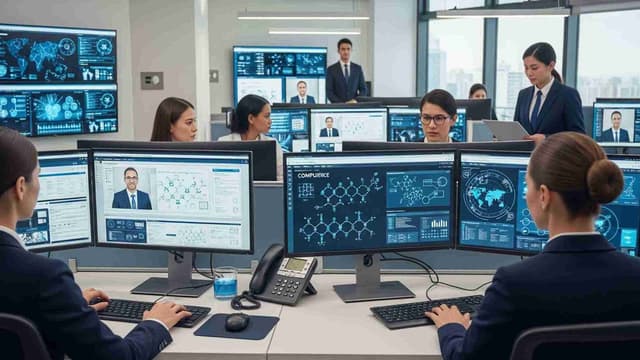
Intelligent IT systems for secure data, compliance, and global collaboration.

Enhancing security, improving workflows, and ensuring smooth operations.
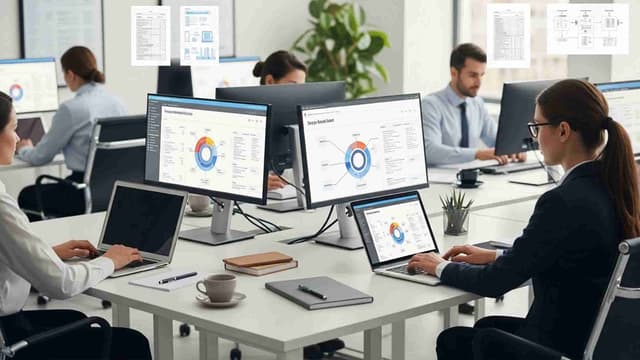
Empowering startups with secure, efficient IT infrastructure.

Managing and securing critical IT systems for enhanced performance.
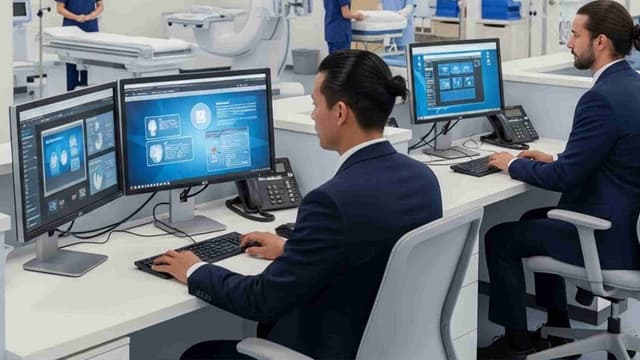
Optimizing IT systems to improve patient care and reliability.

Providing secure IT systems that drive innovation and support scalable growth.
Get answers to common questions about our 24/7 healthcare IT support services, staffing, processes, and service capabilities.
Enterprise Operations Management Services provide structured governance for IT operations, including monitoring, incident management, automation, and compliance oversight. These services integrate with solutions like remote monitoring and alerting and 24x7 managed IT services to ensure continuous uptime and proactive infrastructure support across healthcare enterprises.
Downtime is reduced through proactive monitoring, structured incident response, and optimized escalation workflows. By combining incident response with Proactive Server Monitoring, enterprises detect issues early and resolve them before they impact patient care or operations.
Healthcare organizations require strict operational governance. Enterprise Operations Management Services integrate SLA oversight, change control, and compliance tracking alongside SLA Management and Infrastructure Management to ensure regulatory alignment and secure operational processes.
Yes. These services integrate with EHR platforms to ensure operational continuity. This includes coordination with EHR Support, Cerner Support, and Athena EHR Support to maintain performance and data integrity across healthcare systems.
Performance improves through structured monitoring, network optimization, and automation. By integrating network monitoring and management with performance tuning and end-to-end infrastructure management, enterprises gain visibility and proactive control over system health.
Organizations can begin with a structured assessment to evaluate operational maturity and compliance gaps. From there, solutions are aligned with managed services, automation, and governance frameworks. To initiate this process, visit Contact Us or explore our full range of services at MediSure Solution.
Contact our team to learn how our Enterprise Operations Management Services can support your needs and improve your efficiency.
Call us now: +1 (951) 622-8126