
Optimize server resources without adding more hardware.
Move workloads into a setup that is easier to scale and manage. These server virtualization services help improve uptime, simplify recovery, and keep healthcare systems steady during busy hours.
Your environment runs clinical apps, databases, and tools that teams touch all day. With server virtualization services in healthcare, workloads become easier to recover, patch, and manage under a consistent control layer. MediSure Solution supports healthcare server virtualization services with structured planning, validation, and operations that align with security and compliance needs.
You should see what's included before work begins.
| Area | What We Manage | What You Gain |
|---|---|---|
| Virtual hosts | Host health, patch planning, resource allocation | More stable performance under load |
| Virtual machines | Provisioning, right-sizing, OS updates, service checks | Fewer outages tied to drift |
| Clusters | Failover behavior, capacity headroom, admission controls | Better uptime during events |
| Storage paths | Latency signals, IOPS pressure, capacity thresholds | Fewer slowdowns across systems |
| Network segmentation | VLAN mapping, access controls, and traffic isolation | Safer connectivity for critical workloads |
| Backups and restore checks | Backup visibility, restore testing coordination | More confidence during recovery |
Scroll horizontally to view full table on smaller screens
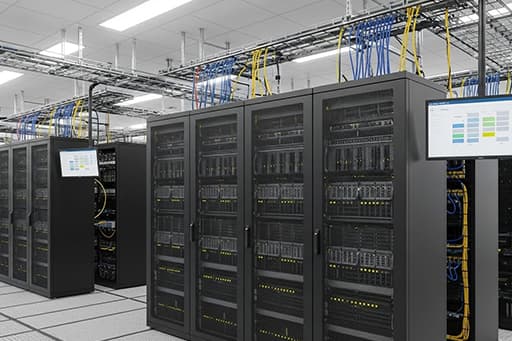
Clusters, shared storage, and isolated networks ensure stability. Our virtualization architecture uses enterprise-grade hypervisors to create robust, scalable environments.
High-availability clusters provide automatic failover capabilities, while shared storage systems ensure data consistency across all virtual machines. Network isolation maintains security between different workloads.
This design supports healthcare applications with the reliability and performance required for patient care systems.
This keeps moves controlled and easy to validate.
Discovery and dependency review
1Target sizing and placement plan
2Pilot migration for low-risk workloads
3Scheduled cutover with validation checks
4Post-cutover monitoring and tuning
5Documentation and runbooks for ongoing operations
6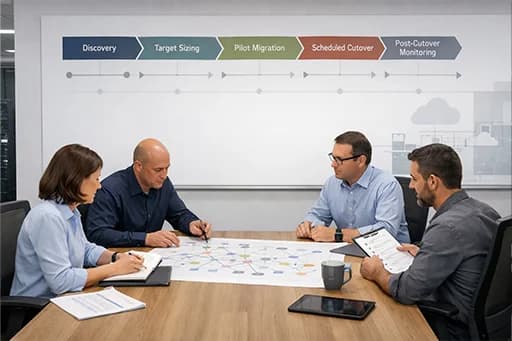

Automated failover keeps workloads running through outages. Our high availability solutions minimize downtime by automatically detecting failures and migrating virtual machines to healthy hosts.
Continuous monitoring ensures rapid response to hardware issues, while distributed resource scheduling optimizes performance across the cluster. Backup and disaster recovery integration provides additional protection.
Healthcare organizations maintain continuous operations even during planned maintenance or unexpected hardware failures.
You should know what changed, what is trending, and what needs attention.
CPU, memory, disk, service status
Catch pressure early, reduce user impact
Headroom, contention, failover readiness
Keep uptime predictable during events
Latency, throughput, and IOPS trends
Reduce slowdowns that feel like app issues
What changed, when, and why
Faster troubleshooting and fewer repeats
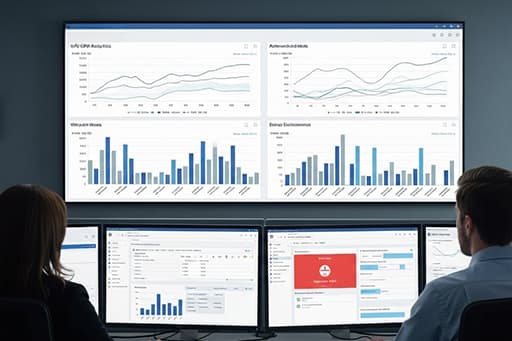
Monitor CPU, memory, and I/O to maintain performance. Our capacity planning tools provide real-time visibility into resource utilization across virtual environments.
Predictive analytics help forecast future resource needs, while automated alerts notify administrators when thresholds are approached. Resource pools can be dynamically adjusted to meet changing demands.
This proactive approach ensures healthcare applications maintain optimal performance during peak usage periods.

Defined patch cycles and health checks maintain compliance. Our operations runbook provides standardized procedures for maintaining virtualized environments.
Regular maintenance windows ensure systems stay current with security patches and updates. Automated health checks verify system integrity and performance baselines.
Documentation and change management processes support audit requirements and maintain operational consistency.
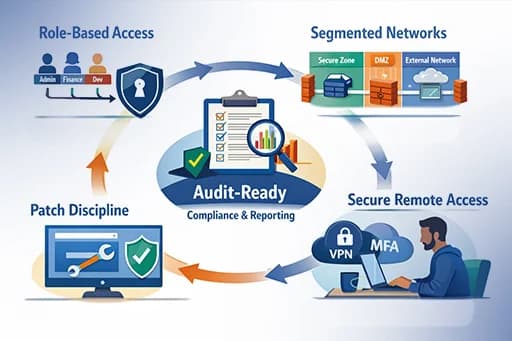
Security should feel built in during daily work. MediSure applies controls that reduce risk without blocking care delivery workflows.
Role-based access and least privilege administration
Segmented networks for sensitive workloads
Patch discipline with validation steps
Audit-ready logging for access and changes
Secure remote support patterns for staff and vendors
We keep your systems steady across teams and locations, so care workflows stay on track when it matters most.
MediSure Solution offers specialized healthcare IT services and support for a variety of industries, ensuring each sector's unique needs are met with secure, efficient, and compliant technology. Here's how we help:

Secure IT systems ensuring uptime, data safety, and smooth healthcare operations.

Modernizing IT systems for flexibility and reliability in patient care.

Faster, more reliable results with IT systems ensuring accuracy and compliance.

Intelligent IT systems for secure data, compliance, and global collaboration.

Enhancing security, improving workflows, and ensuring smooth operations.

Empowering startups with secure, efficient IT infrastructure.

Managing and securing critical IT systems for enhanced performance.
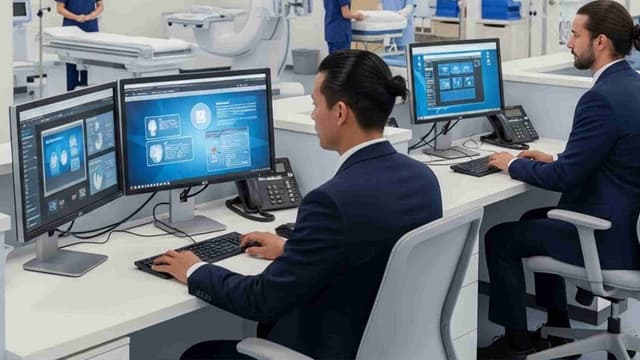
Optimizing IT systems to improve patient care and reliability.

Providing secure IT systems that drive innovation and support scalable growth.
Get answers to common questions about our server virtualization services, processes, and ongoing support.
We start with dependency mapping, sizing, and a pilot move. Cutover planning includes validation steps and rollback options so teams do not get surprises.
Yes. We standardize monitoring, access, and change control across locations so operations stay consistent.
Backups protect data, and restore checks confirm you can recover quickly. Our backup solutions and disaster recovery management services support that recovery plan.
We validate resource allocation, storage latency, and service dependencies. If ongoing tuning is needed, service optimization can support continuous improvements.
Yes. Many teams extend into server management services for monitoring, patch cycles, and change control.
Often, yes, when the bottleneck is resource pressure, storage I/O, or unstable hosts. We trace the constraint and correct it, then monitor trends to prevent repeats.
If you want server virtualization services that improve stability, simplify recovery, and keep healthcare systems ready for peak hours, MediSure is ready to help.
Call us now: +1 (951) 622-8126