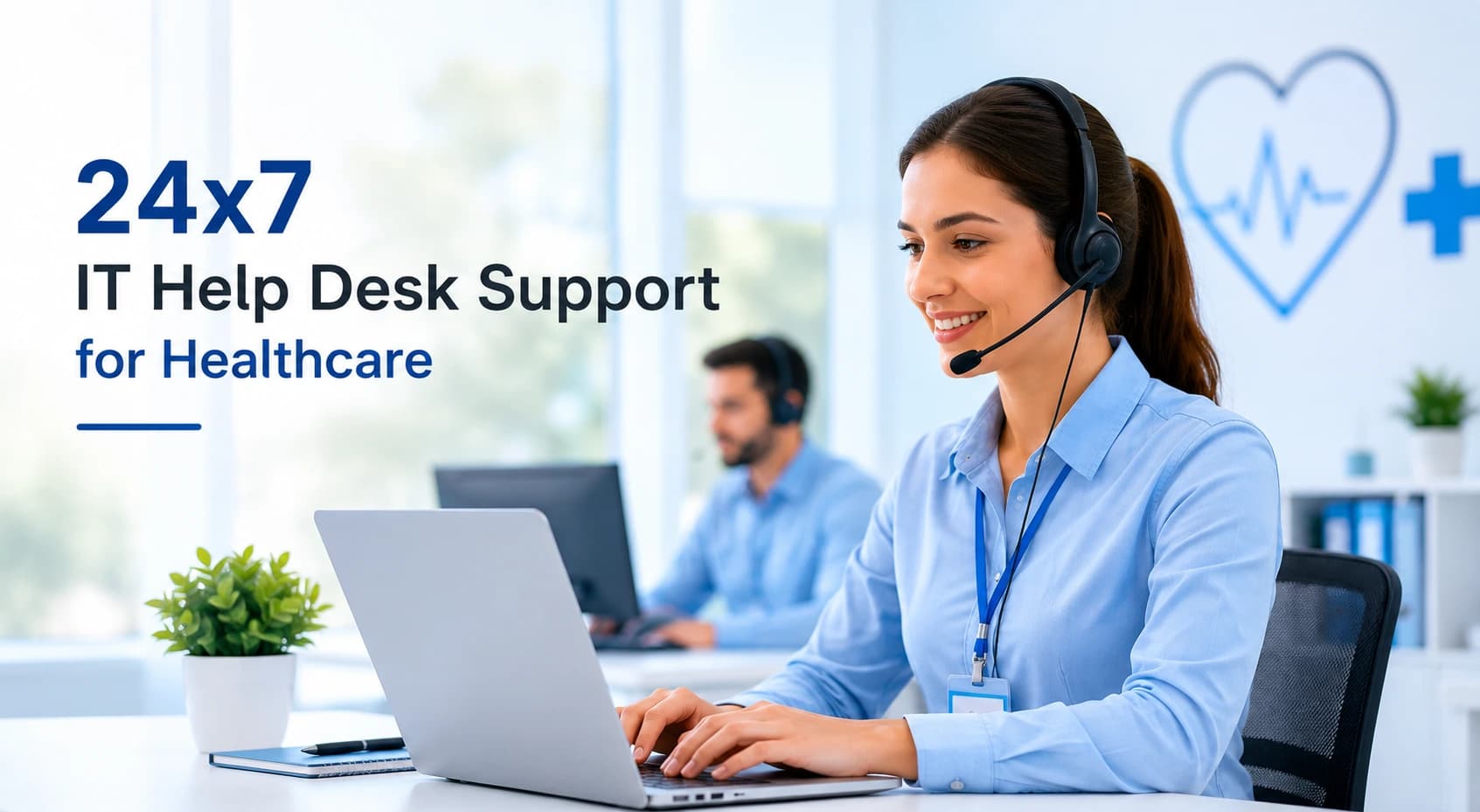
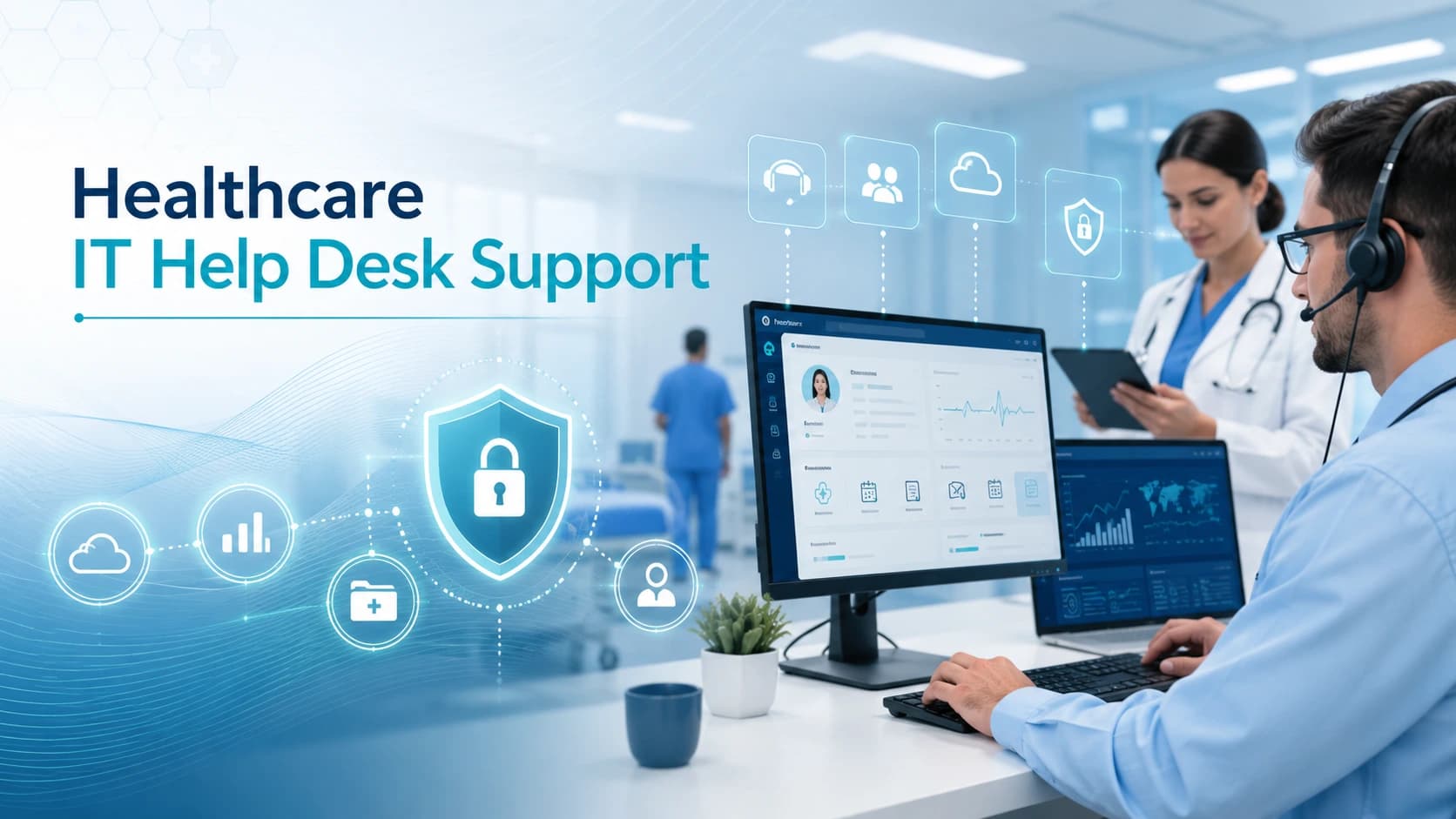
Healthcare IT help desk services are specialized technical support systems that serve as a centralized point of contact for hospitals, clinics, medical staff, and patients across the United States. Their primary goal is to ensure seamless clinical operations, minimize downtime, and maintain patient data privacy and compliance. By managing EHR/EMR systems, patient portals, network security, and medical device troubleshooting, these services allow healthcare professionals to focus on delivering high-quality patient care.
Modern healthcare IT support combines clinical knowledge with IT expertise to address technical issues quickly and efficiently. It is essential for facilities ranging from small clinics to large hospitals to maintain regulatory compliance, protect sensitive data, and streamline workflow efficiency.
What is Healthcare IT Help Desk Services?
Healthcare IT help desk services provide comprehensive IT support tailored for the healthcare sector. Unlike generic IT support, these services integrate knowledge of clinical workflows, medical software systems, and healthcare regulations. They offer assistance for everything from system outages and EMR errors to patient portal issues and billing support.
In the USA, these services are increasingly critical due to the complexity of hospital IT infrastructure, strict HIPAA regulations, and the growing reliance on digital health technologies, telehealth, and cloud-based medical systems.
Importance of Healthcare IT Support in Hospitals and Clinics
Healthcare IT help desks are vital for uninterrupted patient care and operational efficiency. The reasons include:
- Uninterrupted Access to EHR/EMR: Ensures medical staff can access patient records instantly.
- Compliance with HIPAA: Prevents data breaches and legal penalties.
- Operational Efficiency: Structured ticketing systems and escalation procedures save time and resources.
- Financial Benefits: Reduced downtime and faster issue resolution minimize losses and optimize productivity.
- Enhanced Patient Experience: Quick resolution of patient portal, appointment, and billing issues.
Core Features of Healthcare IT Help Desk Support
Healthcare IT help desks come with specialized features tailored for hospitals and clinics, including:
24/7/365 Multi-Channel Support
Round-the-clock assistance through phone, chat, email, and self-service portals.
HIPAA-Compliant Security
Encryption, access control, audit logging, and BAA agreements to protect patient data.
Rapid Issue Triage & Escalation
Critical issues are prioritized and escalated to senior IT staff immediately.
EHR/EMR System Support
Ensures uninterrupted clinical workflows and fast access to patient histories.
Remote IT Assistance
Troubleshooting software and device issues without physical presence.
Hardware and Infrastructure Management
Including hospital networks, servers, PACS imaging systems, and diagnostic devices.
Disaster Recovery & Emergency Support
Backups, cyberattack mitigation, and system recovery during emergencies.
These features ensure hospitals in the USA can maintain continuous operations and secure data handling.
Support for Medical Professionals
Healthcare IT help desk services provide dedicated support for medical staff, including:
EHR/EMR Troubleshooting
Resolving software errors and system glitches to maintain seamless access to patient data.
Medical Device Support
Technical assistance for imaging machines, wearable health monitors, and connected diagnostic devices.
Network and Security Management
Maintaining hospital network reliability while securing sensitive health information.
24/7 Availability
Immediate IT support during critical care, emergency, and high-demand periods.
By offering continuous support, healthcare IT help desks allow medical staff to focus on patient care instead of IT challenges.
Patient-Facing IT Support Services
Patients benefit from IT support in many ways:
Patient Portal Assistance
Guiding patients to access lab results, request prescription refills, and manage health information.
Appointment Scheduling Support
Helping patients book, reschedule, or cancel appointments.
Billing and Insurance Support
Answering questions regarding medical bills, insurance claims, and payments.
These services enhance patient satisfaction, improve engagement, and ensure timely communication with healthcare providers.
Core IT Help Desk Functionalities
Healthcare IT support relies on core functionalities to maintain operational efficiency:
Ticketing Systems
Intelligent systems that track, prioritize, and escalate requests based on urgency.
Self-Service Portals
Empower users to troubleshoot common issues or submit requests independently.
Remote Assistance
IT staff can resolve technical problems remotely, reducing downtime.
Priority Ticket Routing
Ensures critical infrastructure failures or urgent patient-related IT issues are resolved immediately.
These functionalities allow hospitals to operate smoothly without technical delays.
Regulatory Compliance and Data Security
Compliance and data security are at the heart of healthcare IT help desk services:
HIPAA Compliance
All operations follow strict healthcare data privacy regulations.
Encrypted Channels
Protect sensitive patient information during communication.
Access Control & Audit Logging
Track authorized access to patient data and system activity.
BAA Agreements
Ensure vendors handling patient data comply with HIPAA.
Regular Security Updates
Prevent vulnerabilities and protect against cyber threats.
This framework guarantees that healthcare facilities in the USA maintain legal compliance and patient trust.
Hardware and Infrastructure Management
Healthcare IT help desks manage critical hospital infrastructure:
Hospital Networks
Maintaining uninterrupted connectivity for clinical and administrative operations.
Servers and Storage
Managing EHR/EMR systems and secure cloud storage.
Diagnostic Imaging Systems (PACS)
Supporting radiology and imaging systems for quick results access.
Access Control
Secure physical and digital access to devices and records.
Efficient infrastructure management reduces downtime and prevents workflow interruptions.
Disaster Recovery and Emergency Support
Emergencies can disrupt clinical workflows if IT systems fail. Healthcare IT help desks provide:
Data Backup Solutions
Secure and regular backups of patient records and hospital data.
Cyberattack Mitigation
Quick response to security breaches.
System Recovery
Restore servers, networks, and applications to operational status.
Emergency Communication
Rapid technical support during critical incidents in ICUs, ERs, or telehealth services.
Disaster recovery protocols ensure hospitals remain functional during crises.
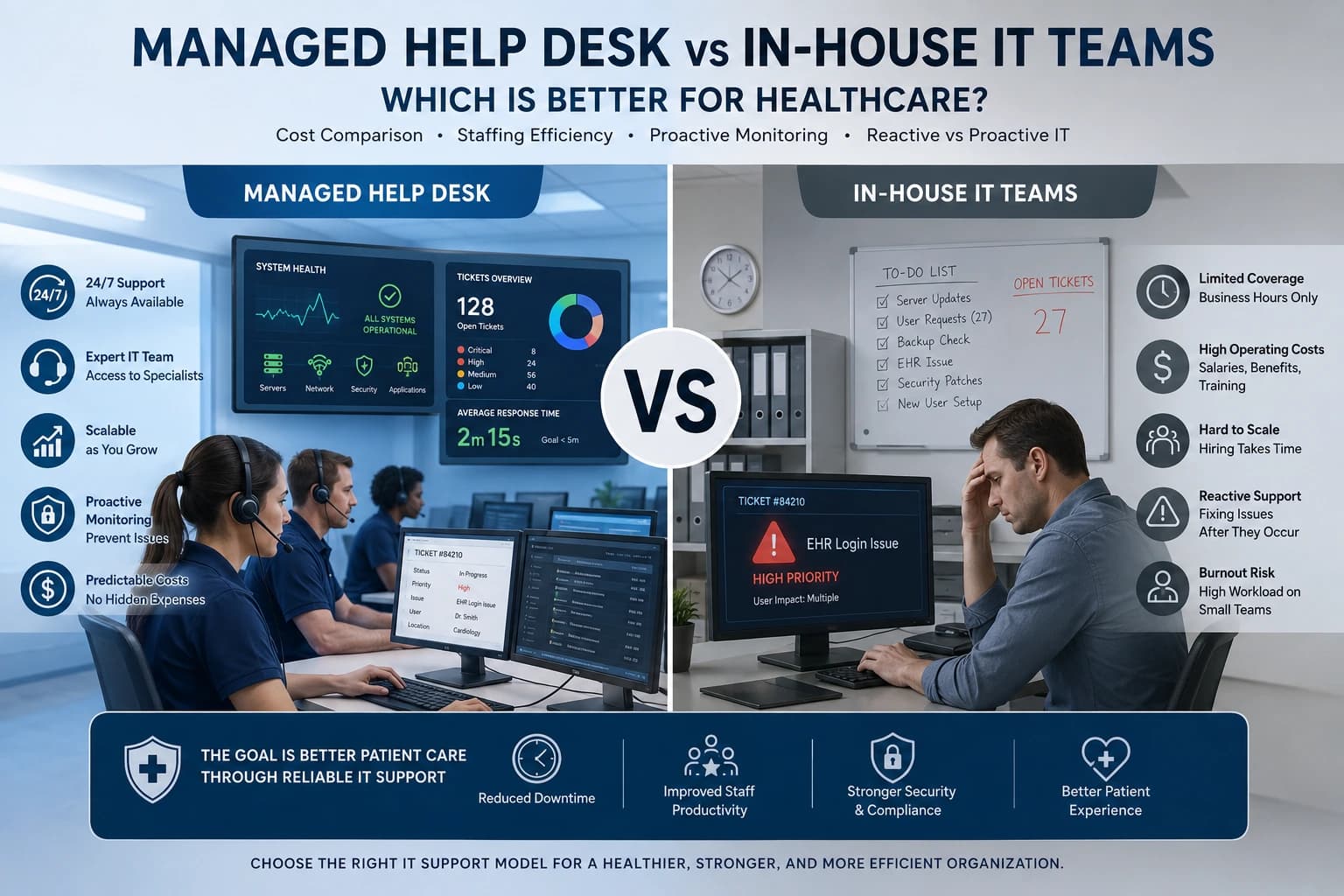
Outsourced vs. In-House Healthcare IT Support in the USA
Healthcare organizations can choose:
In-House IT Teams
Direct control, immediate access, integrated hospital workflows.
Outsourced IT Support
Cost-effective, scalable, access to diverse technical expertise.
Hybrid Models
Combining both in-house and outsourced resources for optimal efficiency.
Evaluation Criteria
HIPAA compliance, responsiveness, expertise, and budget.
The right model depends on hospital size, resources, and compliance requirements.
Selecting the Right Healthcare IT Help Desk Software
Key considerations for selecting IT support software:
Multi-Channel Support
Phone, chat, email, and self-service portals.
Ticket Management
Tracking, prioritization, escalation, and reporting.
HIPAA-Compliant Security
Encryption, access control, and audit logging.
Integration
Seamless connectivity with EHR/EMR systems, medical devices, and networks.
Scalability
Handles growing hospital needs and peak periods.
Choosing proper software ensures efficient, secure, and scalable IT support.
Future Trends in Healthcare IT Help Desk Services
Healthcare IT support is evolving rapidly:
AI-Driven Support
Chatbots and AI for instant resolution of common issues.
Predictive Monitoring
AI predicts system failures before they impact operations.
Telehealth IT Assistance
Support for virtual care platforms.
Cloud Integration
Secure, scalable, and reliable cloud-based infrastructure.
These trends enhance operational efficiency, reduce downtime, and improve patient outcomes.
Conclusion
Healthcare IT help desk services are essential for maintaining smooth clinical workflows, secure patient data, and uninterrupted hospital operations in the USA. By offering comprehensive support for medical staff, patients, infrastructure, and compliance, these services allow hospitals to focus on their core mission—delivering high-quality care.
Selecting the right support model, integrating robust software, and embracing emerging technologies ensure that healthcare IT help desks continue to improve efficiency, patient satisfaction, and operational resilience.
Frequently Asked Questions (FAQs)
1. What are Healthcare IT Help Desk Support Services?
Healthcare IT help desk support services are specialized technical support solutions designed specifically for hospitals, clinics, healthcare providers, and patients. Unlike traditional IT support, healthcare help desks understand clinical workflows, Electronic Health Records (EHR), Electronic Medical Records (EMR), medical devices, telehealth platforms, and healthcare compliance requirements. They act as a centralized support center that helps resolve technical issues, maintain system performance, protect patient data, and ensure uninterrupted healthcare operations. Their primary objective is to minimize downtime and allow healthcare professionals to focus on patient care rather than technology-related challenges.
2. Why is EHR and EMR Support Important in Healthcare IT Help Desks?
EHR and EMR systems are the backbone of modern healthcare organizations because they store patient histories, treatment plans, prescriptions, laboratory results, and clinical documentation. Healthcare IT help desks provide specialized support for platforms such as Epic, Cerner, Athenahealth, and other healthcare applications. They assist healthcare staff with login issues, software errors, data access problems, workflow interruptions, and system performance concerns. Effective EHR and EMR support ensures clinicians can quickly access accurate patient information, improve care coordination, reduce documentation errors, and maintain efficient clinical operations.
3. How Do Healthcare IT Help Desks Ensure HIPAA Compliance and Data Security?
Healthcare IT help desk teams follow strict security protocols to protect sensitive patient information and maintain HIPAA compliance. They use encrypted communication channels, secure password management procedures, role-based access controls, audit logging, and Business Associate Agreements (BAAs) when handling Protected Health Information (PHI). In addition, they continuously monitor systems for security threats, perform regular software updates, and help healthcare organizations prevent data breaches. These measures ensure patient information remains confidential while helping organizations avoid regulatory penalties and maintain trust.
4. What Types of Medical Devices and Infrastructure Do Healthcare IT Help Desks Support?
Healthcare IT help desks support a wide range of clinical technologies and healthcare infrastructure. This includes diagnostic imaging systems, PACS platforms, laboratory equipment, connected medical devices, wearable health monitors, telehealth platforms, hospital networks, servers, cloud environments, and storage systems. IT specialists assist with device integration, connectivity issues, software configuration, maintenance, and troubleshooting. By ensuring these systems operate efficiently, healthcare organizations can maintain uninterrupted patient care and improve overall operational performance.
5. Why Is 24/7/365 Healthcare IT Help Desk Support Necessary?
Healthcare organizations operate around the clock, making continuous IT support essential. Technical issues can occur at any time and may directly impact patient care if not resolved quickly. Healthcare IT help desks provide 24/7/365 support through phone, email, chat, remote assistance, and self-service portals. They use structured triage processes, priority ticket routing, and Service Level Agreements (SLAs) to ensure critical incidents are escalated and resolved rapidly. Continuous availability minimizes downtime, supports emergency departments and critical care units, and helps healthcare providers maintain reliable clinical services.
6. How Do Healthcare IT Help Desks Improve the Patient Experience?
Healthcare IT help desks support patients by assisting with patient portal access, telehealth connectivity, appointment scheduling, prescription refill requests, billing inquiries, insurance-related questions, and digital payment systems. By helping patients quickly resolve technical issues, healthcare organizations can improve communication, increase patient engagement, and enhance satisfaction. Efficient patient-facing support also encourages greater use of digital healthcare services, making healthcare more accessible and convenient for patients.
7. What Future Trends Are Shaping Healthcare IT Help Desk Services?
Healthcare IT help desk services are evolving rapidly with the adoption of advanced technologies. Artificial Intelligence (AI) and chatbots are helping resolve routine issues instantly, while predictive monitoring tools identify potential system failures before they impact operations. Cloud-based healthcare infrastructure is improving scalability, security, and accessibility, while telehealth support continues to expand as virtual care becomes more common. These innovations enable healthcare organizations to reduce downtime, improve operational efficiency, strengthen cybersecurity, and deliver better patient outcomes through proactive and intelligent IT support.