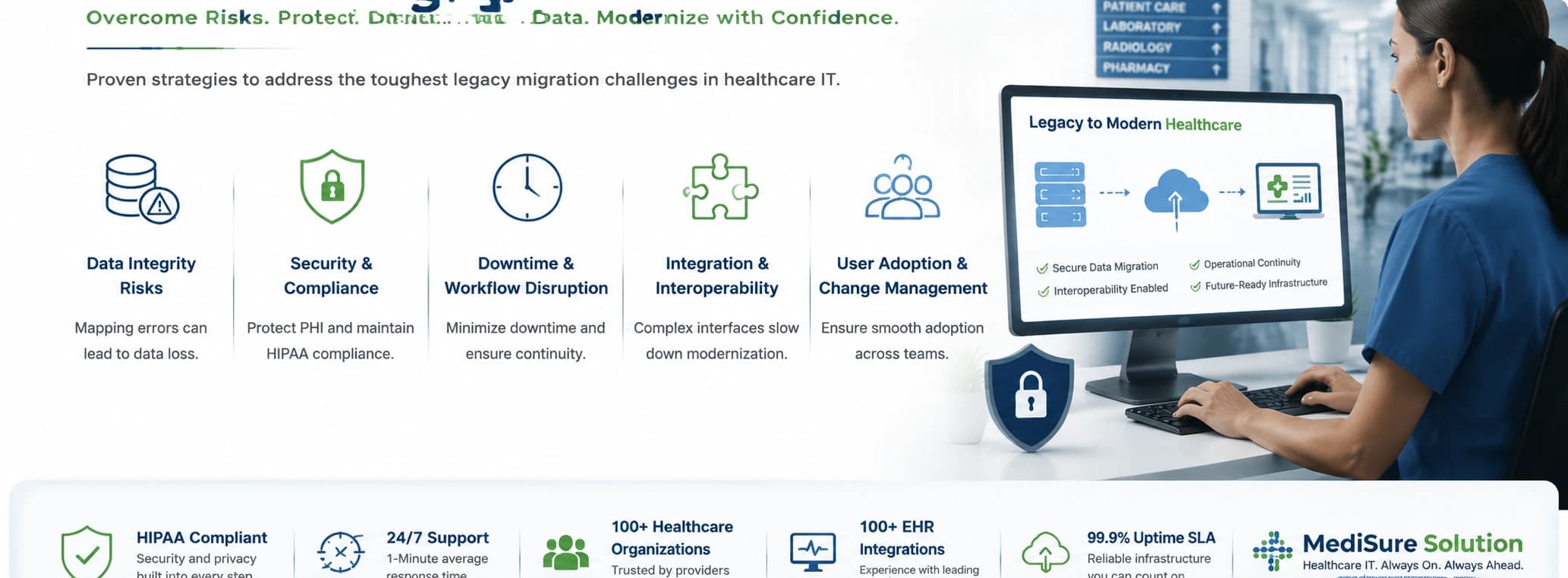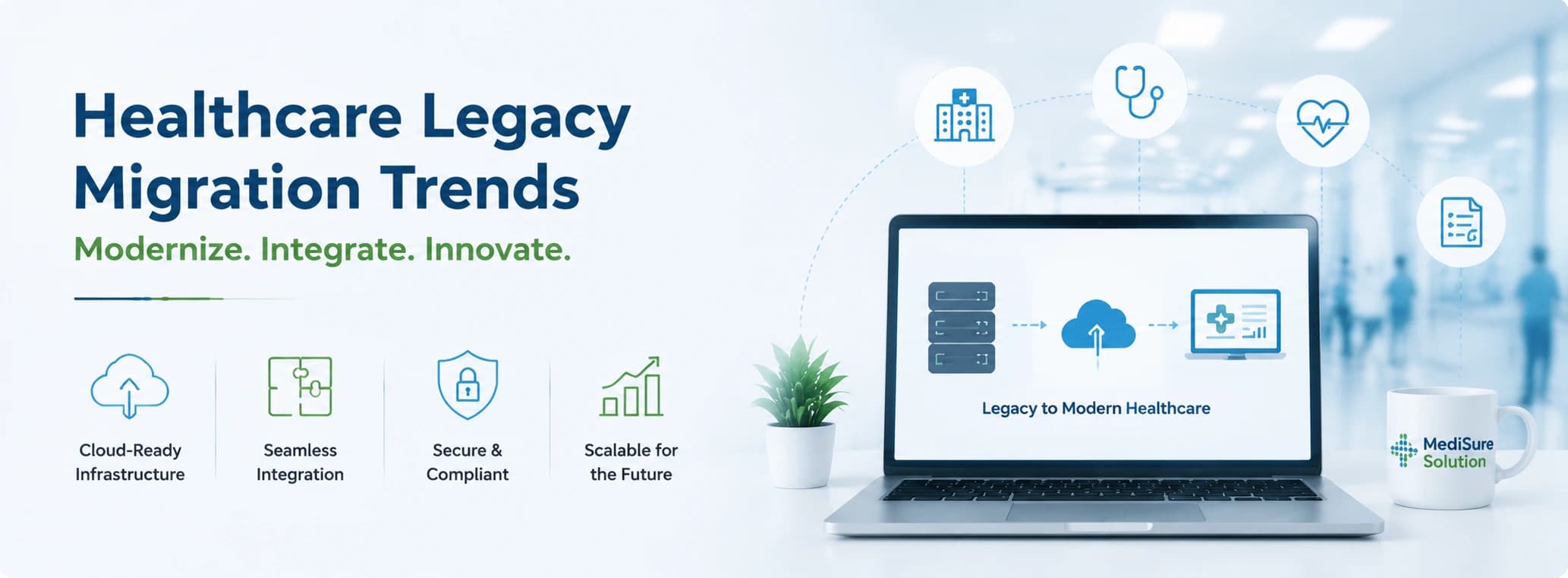
When legacy systems fail in a healthcare environment, the cost is not measured in dollars alone. Clinical workflows slow down, historical patient records become harder to access, compliance risks increase, and IT teams are forced to maintain outdated infrastructure that no longer aligns with modern interoperability requirements.
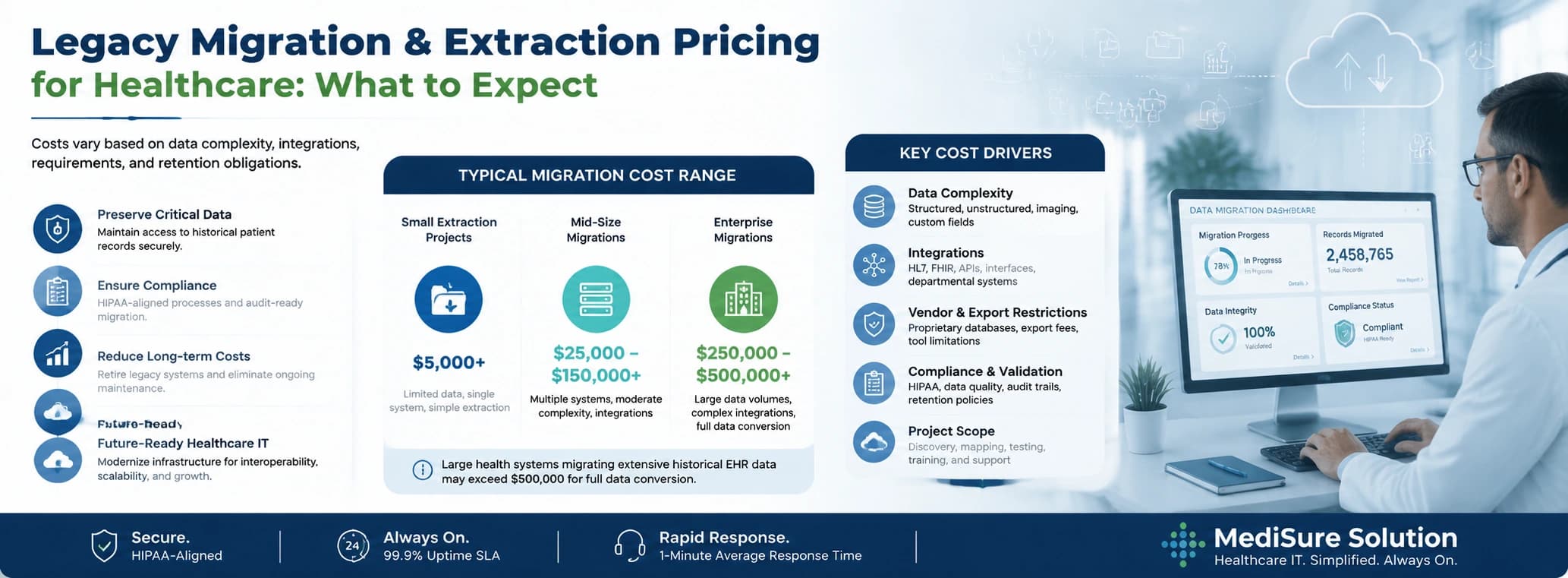
Understanding legacy migration pricing healthcare organizations should expect has become increasingly important as hospitals, clinics, laboratories, and healthcare startups modernize EHR platforms, retire aging applications, and prepare for stricter data governance requirements. Industry estimates suggest healthcare legacy migration projects can range from approximately $5,000 for limited extractions to more than $250,000 for large-scale enterprise migrations, depending on data complexity, integrations, compliance requirements, and retention obligations. Industry research also indicates that large health systems migrating extensive historical EHR data may see costs exceed $500,000 when full data conversion is required.
For healthcare leaders evaluating modernization initiatives, the challenge is not simply determining project cost—it is understanding what drives those costs, where hidden expenses emerge, and how to build a migration strategy that protects operations while maintaining HIPAA compliance.
Why Healthcare Organizations Are Struggling With Legacy Data Migration Costs
Healthcare organizations rarely operate from a single system of record. A hospital may simultaneously manage legacy EHR platforms, PACS archives, billing applications, laboratory systems, and specialty software accumulated through acquisitions or departmental purchasing decisions.
An IT Director responsible for multiple hospital locations cannot accurately budget migration costs when each legacy platform stores data differently and requires unique extraction methods. A Clinical Informatics Manager overseeing a Cerner-to-Epic transition often encounters inconsistent data structures, historical records, and interoperability challenges that expand project scope. Similarly, a clinic operating eClinicalWorks without dedicated migration expertise may underestimate scoped extraction fees and vendor estimates associated with retiring older applications.
The result is a planning gap. Clinical teams expect immediate access to historical records, while IT departments must balance compliance requirements, data retention obligations, integration dependencies, and budget constraints. Cost drivers such as data volume, per system migration complexity, and vendor cooperation often emerge only after technical discovery begins.
This is why successful healthcare migration projects start with detailed assessment and extraction planning rather than cost assumptions.
Healthcare Legacy Migration Pricing Overview
| Migration Type | Price Range | Description |
|---|---|---|
| Simple Migration | $10,000 – $20,000 | Single-module refactoring, minor upgrades, or small legacy systems with limited integrations and low data complexity. |
| Medium Migration | $50,000 – $100,000 | Full EHR re-engineering or regional system replacement with up to 5 integrations and moderate compliance requirements. |
| Enterprise Migration | $100,000 – $500,000+ | Large-scale multi-facility or multi-EHR consolidation involving strict HIPAA compliance, complex integrations, and large historical data archives. |
Why Data Complexity Matters More Than Data Volume
Many healthcare leaders initially assume migration costs are determined by record counts alone. In reality, the complexity of healthcare data often has a greater impact on project pricing than the number of files being moved.
Structured datasets such as demographics, appointments, medication histories, and billing records can typically be mapped efficiently into modern EHR platforms using HL7 FHIR, HL7 v2.x, and CDA-based workflows. However, healthcare environments also contain unstructured clinical content including scanned PDFs, pathology reports, physician notes, DICOM imaging archives, and custom database fields that require specialized extraction and transformation.
Industry estimates suggest pre-migration auditing, mapping, and extraction activities commonly range between $15,000 and $40,000 depending on source-system complexity and data quality requirements. Organizations frequently discover duplicate records, incomplete mappings, or unsupported data structures that require remediation before migration can proceed.
For healthcare CIOs and IT Operations leaders, this means budgeting should prioritize data assessment rather than focusing solely on storage volume. A smaller dataset spread across multiple disconnected systems may ultimately cost more to migrate than a larger but standardized repository.
MediSure Solution’s Legacy Migration services help healthcare organizations assess, extract, validate, and modernize critical clinical data while maintaining HIPAA compliance throughout the process.
Full Migration Is Not Always the Most Cost-Effective Strategy
One of the most expensive mistakes healthcare organizations make is assuming every historical record must be fully migrated into a new EHR environment.
In many modernization initiatives, only active patient data requires direct migration into platforms such as Epic, Cerner, Athenahealth, or eClinicalWorks. Historical records that must be retained for legal, compliance, or operational purposes can often be archived within a searchable repository while the original application is retired.
Industry estimates indicate active archive implementation typically ranges from $20,000 to more than $100,000 depending on facility count, retention requirements, and patient volume. By contrast, large-scale active migration projects involving years of historical records can exceed $500,000 for major healthcare systems.
This distinction has significant operational implications. Healthcare organizations remain responsible for record retention requirements that may extend from seven to twenty-five years depending on state regulations and record type. Maintaining legacy infrastructure solely for occasional record access often creates unnecessary licensing, server, and support expenses.
For Healthcare CIOs and Practice Administrators, the key question is not “How much data should be moved?” but rather “Which data must remain operationally available inside the new workflow?”
MediSure Solution helps healthcare organizations evaluate migration-versus-archival strategies that reduce operational burden while preserving long-term data accessibility.
Vendor Restrictions Are Often the Biggest Budget Variable
Few healthcare migration projects fail because of technical limitations. Many experience budget overruns because of legacy vendor restrictions.
Older EHR, EMR, billing, and departmental systems frequently store information within proprietary databases that limit direct access. Some vendors charge substantial export fees, restrict extraction tools, or require professional services engagements before releasing data. These factors can dramatically increase project costs and extend timelines.
Industry guidance consistently identifies vendor cooperation as one of the most significant migration cost drivers. When extraction methods are limited, organizations often require custom scripts, database specialists, validation workflows, and additional testing cycles to ensure data integrity during migration.
Healthcare environments also face unique validation requirements. Every extracted dataset must be verified for completeness, auditability, and HIPAA compliance before decommissioning a source system. This often involves reconciliation exercises across clinical documentation, billing records, scheduling systems, and imaging repositories.
For IT Directors managing modernization programs, obtaining vendor participation details early in project planning can prevent unexpected budget escalation and timeline disruptions.
MediSure Solution’s healthcare migration specialists work with legacy vendors, database teams, and EHR stakeholders to streamline extraction planning and minimize operational risk.
The Hidden Costs of Keeping Legacy Systems Alive
Migration projects are frequently evaluated against implementation costs, but many healthcare organizations overlook the long-term expense of retaining obsolete systems.
A legacy server supporting an outdated EHR may appear inexpensive because it remains operational. However, ongoing licensing fees, infrastructure maintenance, backup management, security monitoring, compliance validation, and specialized support requirements create recurring costs year after year.
Industry estimates suggest organizations often spend between $4,000 and $8,000 annually simply maintaining a single legacy environment. Additional research indicates some healthcare organizations spend significantly more when licensing, hardware refresh cycles, and operational support are included.
Legacy environments also create security concerns. Older operating systems and unsupported applications can complicate HIPAA compliance efforts and increase exposure to cyber threats. As healthcare organizations adopt cloud-based architectures, interoperability standards, and advanced analytics platforms, unsupported systems increasingly become operational bottlenecks.
For Healthcare Startup CTOs, Hospital CIOs, and Lab IT Coordinators, migration discussions should focus on total cost of ownership rather than project cost alone. A well-executed migration or archival initiative frequently produces measurable ROI through reduced infrastructure overhead, lower support requirements, and simplified compliance management.
MediSure Solution supports healthcare organizations with 24/7 infrastructure monitoring, legacy system retirement planning, and migration strategies backed by a 99.9% uptime SLA and a one-minute average response time.
What Healthcare Leaders Should Include in Their Migration Budget
Healthcare migration budgets should extend beyond extraction costs and account for every operational dependency that affects continuity.
Organizations typically need to budget for discovery and assessment activities, extraction and transformation services, validation testing, interoperability development, archive deployment, security reviews, HIPAA compliance verification, user acceptance testing, and decommissioning support.
Integration requirements frequently represent one of the largest variables. Industry estimates suggest interoperability and custom integration work can range from approximately $20,000 to $150,000 when archived data must remain accessible through modern EHR interfaces.
Healthcare organizations supporting HL7 FHIR APIs, HL7 v2.x messaging environments, CDA document exchanges, PACS repositories, and multi-system workflows should expect integration planning to play a major role in overall project scope.
For decision-makers, the most accurate migration budgets emerge from detailed discovery exercises rather than generalized industry averages. Every legacy ecosystem contains unique technical dependencies that influence cost, risk, and timeline.
MediSure Solution currently supports more than 100 healthcare organizations nationwide, delivers support across 100+ EHR integrations, and has experience serving hospitals, clinics, laboratories, healthcare startups, and specialty medical organizations. These operational engagements consistently reinforce one reality: successful migration projects begin with accurate scoping, not assumptions.
MediSure Solution’s editorial content is developed by practitioners with direct experience supporting hospitals, medical centers, laboratories, and healthcare startups across the United States. Our insights are grounded in real-world healthcare IT engagements, infrastructure modernization projects, and legacy system retirement initiatives—not theoretical frameworks.
Conclusion
Healthcare IT environments are under more pressure than ever before. Over the next several years, organizations will continue retiring aging applications, expanding cloud adoption, strengthening cybersecurity programs, and improving interoperability through standards such as HL7 FHIR. Legacy systems that once supported operations effectively are increasingly becoming barriers to efficiency, compliance, and modernization.
The organizations that begin planning now will be better positioned to control costs, reduce operational risk, and avoid emergency migrations later. Whether the objective is retiring a legacy EHR, consolidating multiple platforms, or creating a compliant long-term archive, success depends on accurate scoping, realistic budgeting, and experienced healthcare IT guidance.
At MediSure Solution, we help hospitals, clinics, laboratories, healthcare startups, and healthcare enterprises stay operational, compliant, and ahead of downtime through expert legacy migration services, 24/7 support, and healthcare-focused IT expertise. If you’re evaluating a migration project, now is the time to build a roadmap that aligns technology modernization with long-term operational goals.
FAQs
How much does healthcare legacy migration typically cost?
Industry estimates suggest costs range from approximately $5,000 for small extraction projects to more than $250,000 for enterprise-scale migrations. Large health systems performing full historical EHR migrations may exceed $500,000 depending on scope and complexity.
What are the biggest cost drivers in healthcare migration projects?
The primary cost drivers include data complexity, record volume, vendor export restrictions, interoperability requirements, compliance obligations, validation testing, and the number of systems being retired.
What is a per system migration cost model?
A per system migration approach prices projects based on each legacy application being extracted or retired. Costs vary depending on database structure, accessibility, data quality, and integration requirements.
Are archive projects cheaper than full migrations?
In many cases, yes. Active archiving allows healthcare organizations to retire legacy systems while maintaining access to historical records without importing all data into a new EHR platform.
Why do vendor estimates vary so widely?
Vendor estimates differ because every healthcare environment contains unique data structures, integrations, compliance requirements, retention policies, and extraction challenges. Discovery and assessment activities are necessary to develop accurate project pricing.
How long does a healthcare migration project take?
Simple projects may be completed within one to two months, while enterprise migrations involving multiple facilities, extensive integrations, and compliance validation can extend beyond six months.