When healthcare systems fail, the cost is not measured in dollars alone. A server outage can delay access to EHR records, interrupt lab workflows, impact imaging availability, and create operational bottlenecks across multiple departments. For healthcare organizations already balancing cybersecurity threats, interoperability requirements, and staffing shortages, technology decisions have direct implications for workflow continuity and organizational resilience.
The debate around legacy migration vs IT upgrade has become increasingly important as hospitals, clinics, laboratories, and healthcare startups evaluate how to modernize aging infrastructure. Industry estimates suggest that maintaining legacy healthcare systems can consume significant portions of IT budgets while limiting scalability and innovation. At the same time, healthcare organizations face growing pressure to support cloud-based applications, HL7 FHIR interoperability, telehealth platforms, and advanced analytics capabilities.
While traditional upgrades can extend the life of existing systems, legacy migration offers a fundamentally different approach to modernization. Understanding when each strategy makes sense is essential for healthcare leaders responsible for uptime, compliance, and long-term technology planning.
Why Healthcare Organizations Are Struggling With IT Modernization Decisions
Healthcare technology environments rarely consist of a single platform. An IT Director managing multiple hospital locations may be responsible for Cerner EHR systems, PACS infrastructure, laboratory information systems, virtualized servers, and dozens of third-party integrations.
The challenge is that clinical teams increasingly expect real-time access, seamless interoperability, mobile connectivity, and uninterrupted performance. Meanwhile, many healthcare organizations continue operating applications built on aging architectures that were never designed to support modern modernization strategies.
A Clinical Informatics Manager attempting to integrate HL7 FHIR APIs with a legacy platform often discovers architectural limitations that upgrades alone cannot solve. Similarly, a clinic running eClinicalWorks without dedicated infrastructure support may find that routine updates improve stability temporarily but do little to address long-term scalability concerns.
As organizations evaluate project timelines, risk reduction initiatives, and cost vs value considerations, the distinction between upgrading and migrating becomes more significant. What appears to be a simple technology refresh can ultimately determine whether an organization remains adaptable over the next decade.
Why Legacy Migration Solves Problems That Traditional Upgrades Cannot
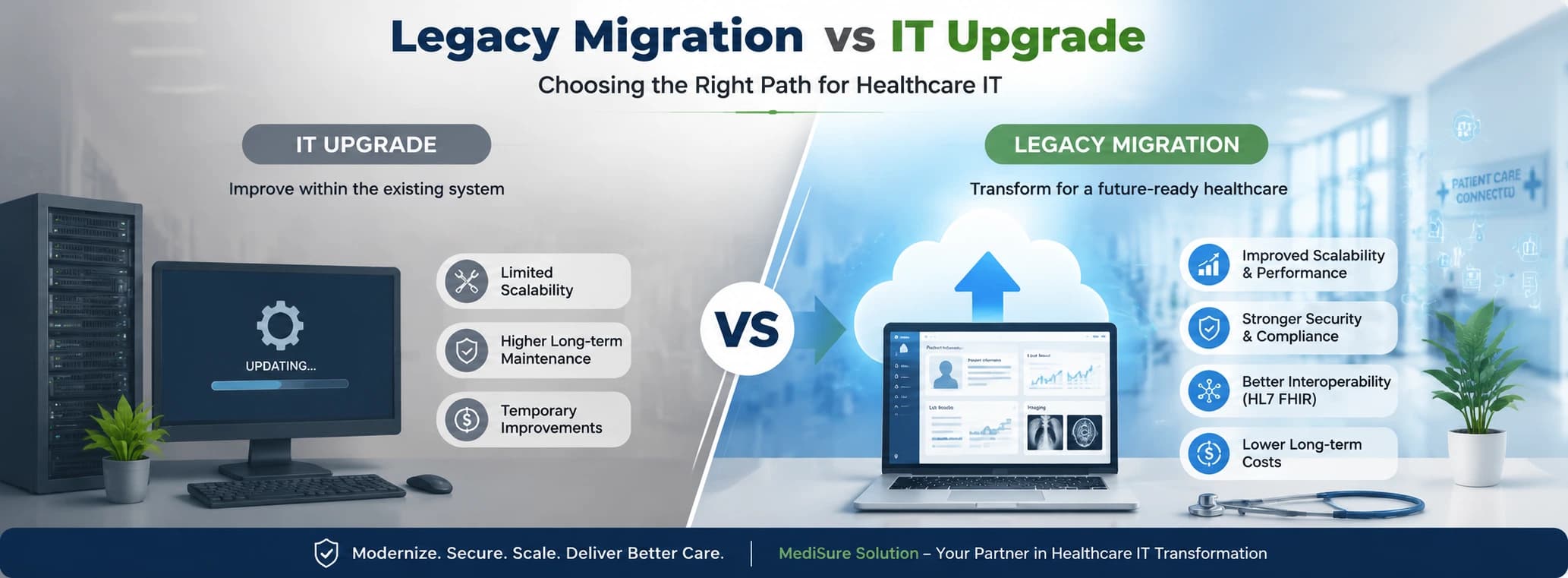
A traditional IT upgrade focuses on improving an existing environment. This may involve updating server hardware, applying software patches, upgrading operating systems, or moving to a newer version of an application while preserving the underlying architecture.
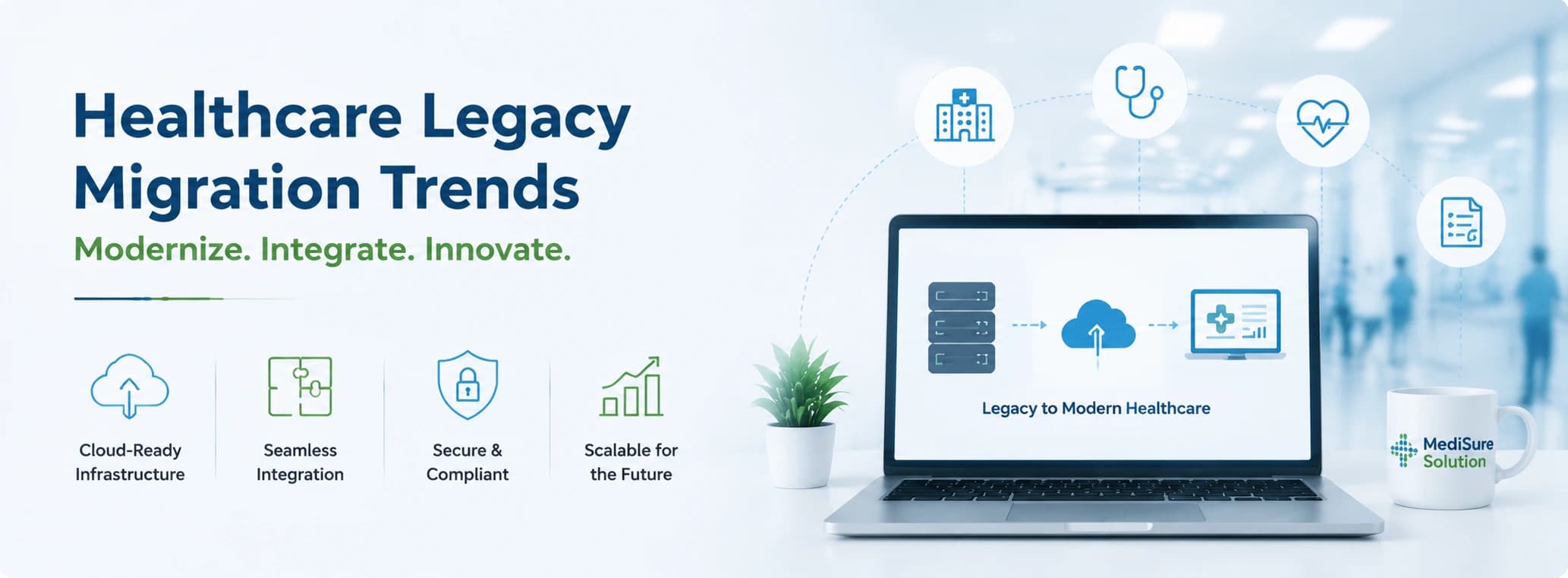
Legacy migration is fundamentally different. It involves transitioning applications, databases, and workflows away from outdated environments and into modern platforms such as cloud infrastructure, SaaS ecosystems, or API-driven architectures. In healthcare, this often includes migrating EHR data, integrating HL7 FHIR capabilities, modernizing data repositories, and redesigning interoperability frameworks.
Industry guidance on healthcare modernization consistently highlights that migration enables scalability, improved interoperability, and support for emerging technologies that legacy architectures often struggle to accommodate. Modern environments are better positioned to support telehealth services, remote workforce access, AI-enabled analytics, and evolving regulatory requirements.
What this means for Healthcare CIOs and IT Directors is that upgrading may extend system life, but migration addresses technical debt at its source. Organizations evaluating long-term digital transformation initiatives often discover that repeated upgrades eventually cost more than a structured modernization effort.
MediSure Solution’s Legacy Migration services help healthcare organizations modernize critical systems while maintaining HIPAA-aligned operational continuity throughout the transition.
Why Security and Compliance Risks Increase as Legacy Systems Age
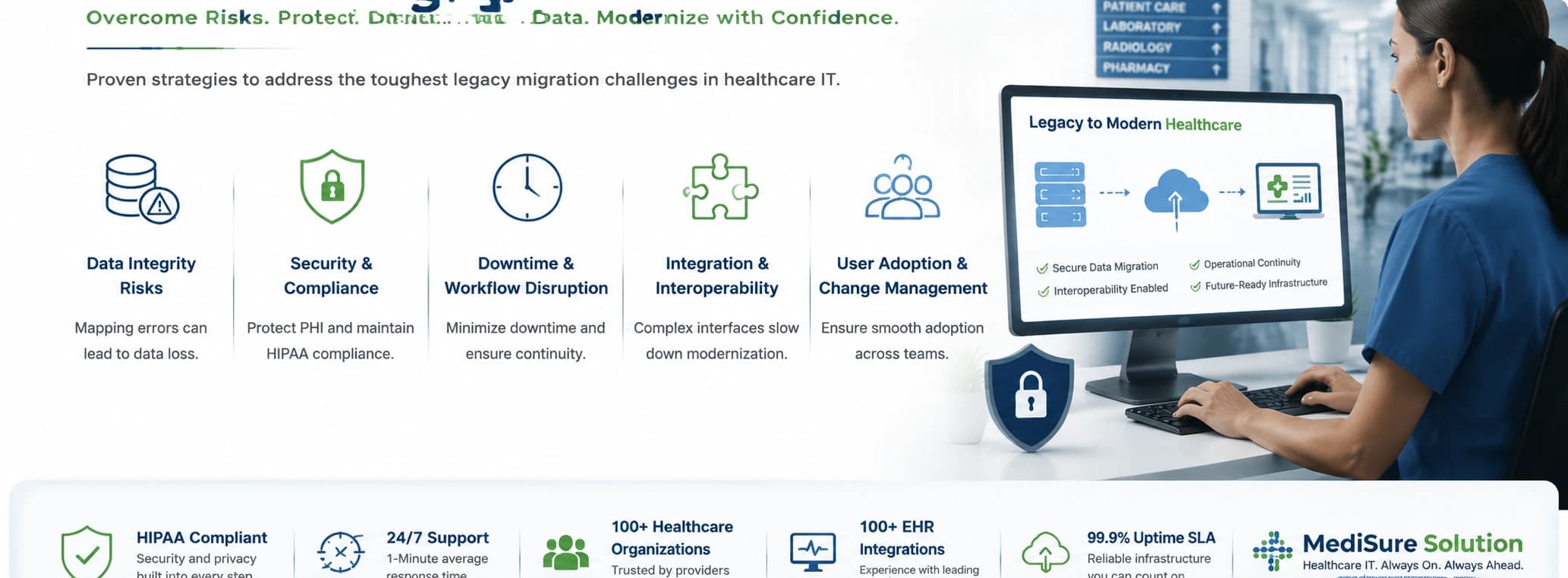
Healthcare organizations remain among the most targeted sectors for cyberattacks. As infrastructure ages, maintaining security becomes progressively more difficult because older systems frequently lack compatibility with modern security controls, encryption standards, and Zero Trust frameworks.
Traditional upgrades can address immediate vulnerabilities through patches and vendor-supported updates. However, unsupported applications, end-of-life operating systems, and outdated server environments often remain exposed even after significant upgrade investments.
Modern migration initiatives provide an opportunity to redesign security architecture rather than simply maintain it. Cloud-based environments commonly incorporate built-in disaster recovery capabilities, enhanced encryption frameworks, automated backup processes, and more sophisticated access management controls. These capabilities support HIPAA compliance objectives while improving organizational resilience.
MediSure Solution has supported more than 100 healthcare organizations and over 10 hospitals with infrastructure modernization initiatives while maintaining compliance-focused operational practices. Through healthcare-specific expertise, the organization helps clients balance modernization goals with security, uptime, and regulatory requirements.
What this means for Directors of IT Operations and Healthcare Startup CTOs is that risk reduction should be evaluated beyond immediate patch management. The larger question is whether existing infrastructure can continue supporting evolving cybersecurity demands over the next five years.
MediSure Solution provides healthcare-focused infrastructure support, security oversight, and 24/7 monitoring backed by a 99.9% uptime SLA and a 1-minute average response time.
Why Cost vs Value Matters More Than Initial Project Expense
One of the most common arguments against migration is cost. Legacy migration projects often require planning, stakeholder alignment, data validation, testing environments, and staff training. On paper, a traditional upgrade frequently appears less expensive.
However, healthcare leaders increasingly recognize that cost evaluation must include total cost of ownership. Industry estimates suggest that maintaining legacy systems can cost organizations tens of thousands of dollars annually per system due to ongoing maintenance, support limitations, hardware replacement requirements, and operational inefficiencies.
Traditional upgrades frequently preserve these long-term expenses because they maintain the same architectural constraints. Infrastructure still requires management, licensing costs continue accumulating, and interoperability challenges remain unresolved.
Migration projects often shift spending from capital-intensive hardware investments toward more flexible operational models. Cloud environments allow organizations to scale storage and computing resources based on demand rather than maintaining excess capacity year-round.
What this means for Practice Managers, Lab IT Coordinators, and Pharma IT leaders is that modernization decisions should be measured against future operational value—not solely against the initial project budget. The most affordable project today may become the most expensive environment to maintain tomorrow.
MediSure Solution helps healthcare organizations evaluate modernization strategies based on operational requirements, compliance objectives, and long-term infrastructure sustainability.
Why Phased Migration Reduces Risk Better Than Most Healthcare Leaders Expect
One of the biggest misconceptions about legacy migration is that it requires a disruptive “rip-and-replace” approach. In reality, many successful healthcare modernization projects rely on phased migration strategies that minimize operational disruption.
Modern approaches frequently involve hybrid environments where legacy systems and modern platforms coexist during transition periods. Techniques such as API enablement, phased data migration, and incremental modernization allow organizations to preserve clinical workflows while gradually replacing outdated components.
Healthcare organizations managing EHR platforms, laboratory systems, imaging repositories, and revenue cycle applications often adopt migration frameworks that prioritize continuity. Critical datasets can be validated before cutover, failover plans can be tested in advance, and recovery objectives can be aligned with organizational SLA requirements.
MediSure Solution’s experience supporting healthcare environments with more than 100 EHR integrations provides practical insight into how complex migrations can be executed without compromising operational stability. Success depends less on the technology itself and more on governance, planning, testing, and stakeholder alignment.
What this means for Clinical Informatics Managers and Healthcare CIOs is that project timelines should be evaluated based on risk mitigation and operational continuity rather than speed alone. A carefully staged migration often creates less disruption than years of repeated upgrades and emergency maintenance events.
MediSure Solution’s healthcare migration specialists help organizations plan phased modernization initiatives that prioritize uptime, compliance, and workflow continuity.
MediSure Solution’s editorial content is developed by practitioners with direct experience supporting hospitals, medical centers, laboratories, and healthcare startups across the United States. Our insights are grounded in real-world operational engagements supporting healthcare infrastructure, EHR ecosystems, interoperability initiatives, and compliance-focused technology modernization efforts—not theoretical frameworks.
Conclusion
Healthcare IT environments are under more pressure than ever before. Organizations must simultaneously maintain uptime, support interoperability initiatives, strengthen cybersecurity defenses, manage compliance obligations, and prepare for future digital health requirements.
Over the next two to three years, healthcare infrastructure will continue moving toward cloud-enabled architectures, API-driven interoperability frameworks, AI-supported operational workflows, and increasingly sophisticated security models. Organizations relying exclusively on traditional upgrade cycles may find themselves investing heavily just to maintain aging environments.
The decision between legacy migration and traditional upgrades ultimately depends on organizational goals, risk tolerance, budget considerations, and technology maturity. However, for many healthcare organizations, migration represents a strategic investment in flexibility, resilience, and long-term operational efficiency rather than a simple technology refresh.
At MediSure Solution, we help hospitals, clinics, laboratories, healthcare startups, and pharmaceutical organizations stay operational, compliant, and ahead of downtime through expert legacy migration, infrastructure management, EHR support, and 24/7 healthcare IT services. Contact our team today to discuss a modernization strategy tailored to your environment and long-term objectives.
FAQs
1. What is the difference between legacy migration and a traditional IT upgrade?
A traditional IT upgrade improves existing systems through software updates, hardware replacements, or version upgrades. Legacy migration involves moving applications, data, and workflows from outdated environments to modern platforms such as cloud infrastructure, SaaS solutions, or modern EHR ecosystems.
2. Is legacy migration better than an IT upgrade for healthcare organizations?
It depends on the organization’s goals. IT upgrades can extend the life of existing systems, while legacy migration provides greater scalability, interoperability, security, and long-term flexibility. Healthcare organizations pursuing digital transformation often benefit more from migration than repeated upgrades.
3. When should a healthcare organization choose legacy migration instead of upgrading?
Organizations should consider migration when legacy systems are approaching end-of-life, creating security risks, limiting interoperability, increasing maintenance costs, or preventing adoption of modern technologies such as cloud computing, telehealth, and HL7 FHIR integrations.
4. Does legacy migration improve healthcare cybersecurity?
Yes. Legacy migration allows healthcare organizations to move away from unsupported systems and adopt modern security frameworks, advanced encryption, cloud-based disaster recovery, access controls, and continuous monitoring capabilities that strengthen overall cybersecurity posture.
5. Which option is more cost-effective: legacy migration or IT upgrades?
While traditional upgrades often have lower upfront costs, legacy migration can provide better long-term value by reducing maintenance expenses, eliminating technical debt, improving efficiency, and supporting future growth without frequent infrastructure investments.
6. Can healthcare organizations migrate systems without disrupting patient care?
Yes. Most successful healthcare migrations use phased implementation strategies, hybrid environments, data validation processes, and controlled testing to minimize downtime and maintain continuity for clinical, administrative, and operational workflows.
7. What are the benefits of legacy migration for healthcare IT modernization?
Key benefits include improved interoperability, enhanced security, better scalability, reduced technical debt, support for cloud technologies, easier compliance management, lower long-term operating costs, and improved readiness for future healthcare innovations.