When patient intake processes fail in a healthcare environment, the cost is not measured in dollars alone. Delayed registrations, incomplete insurance information, missing consent forms, and inefficient routing workflows can create operational challenges that affect every stage of healthcare delivery.
Industry estimates suggest that basic manual intake activities such as demographic verification and patient check-in can cost healthcare organizations between $4 and $6 per patient in administrative overhead. For a clinic processing approximately 100 patients daily, that translates into an estimated $1,400 to $2,300 in daily administrative costs before accounting for claim denials, rework, or workflow inefficiencies (Healthcare Operations Industry Estimates).
At the same time, healthcare organizations are increasingly adopting centralized intake models and digital assessment workflows to reduce administrative burdens and improve coordination across care pathways. The challenge for healthcare leaders is understanding how to evaluate their current intake environment, determine technology requirements, and obtain accurate pricing from vendors that align with organizational goals.
This guide explains how healthcare organizations can conduct a patient intake support assessment, evaluate vendor pricing, and build a roadmap for implementation.
Why Healthcare Organizations Are Struggling With Patient Intake Modernization
Healthcare organizations need intake workflows that are accurate, secure, scalable, and integrated with clinical systems. Yet many organizations continue to rely on fragmented processes that combine paper forms, manual data entry, disconnected applications, and inconsistent workflows.
An IT Director managing five hospital locations cannot efficiently support intake operations when registration processes vary by facility and data must be manually transferred between systems. A Clinical Informatics Manager responsible for EHR optimization faces challenges when patient information arrives incomplete or requires manual correction before entering the record. A Practice Administrator overseeing day-to-day operations often struggles with balancing staffing resources against increasing patient volumes and administrative demands.
The operational gap continues to widen as patients expect digital experiences while healthcare organizations must maintain compliance, security, and workflow continuity. Without a structured assessment process, many organizations risk investing in solutions that fail to address root workflow challenges or integrate effectively with existing healthcare technology infrastructure.
Understanding current-state operations is the first step toward selecting the right intake support solution.
A Successful Assessment Starts With Understanding Your Current Intake Workflow
Before requesting vendor pricing, healthcare organizations must understand exactly how patient information moves through their environment. The most effective assessments focus on operational workflows rather than software features alone.
Patient intake begins with collecting demographic information, insurance details, medical histories, consent documentation, and contact information. That data then supports clinical assessments, triage activities, and care coordination processes. Each handoff creates opportunities for inefficiencies, delays, or duplicate work if systems are not properly connected.
Industry guidance from centralized healthcare intake programs suggests that successful intake operations depend on three interconnected stages: information gathering, clinical assessment, and service planning. Organizations evaluating intake support solutions should examine how each stage is currently managed and identify where bottlenecks occur. Common assessment areas include registration workflows, insurance verification processes, referral management, consent collection, and EHR integration requirements.
What this means for Hospital IT Directors and Healthcare CIOs is that software selection should never begin with vendor demonstrations. Organizations must first establish operational objectives, document workflow challenges, and define measurable outcomes. A structured assessment creates a stronger foundation for evaluating solutions and comparing vendor capabilities.
MediSure Solution helps healthcare organizations assess existing intake workflows and align technology investments with operational objectives through expert healthcare IT consulting and support — visit medisuresolution.com.
The Right Pricing Evaluation Focuses on Total Cost of Ownership, Not Subscription Fees
One of the most common mistakes healthcare organizations make during vendor evaluations is focusing exclusively on monthly subscription pricing. While subscription costs matter, they represent only one component of the overall investment.
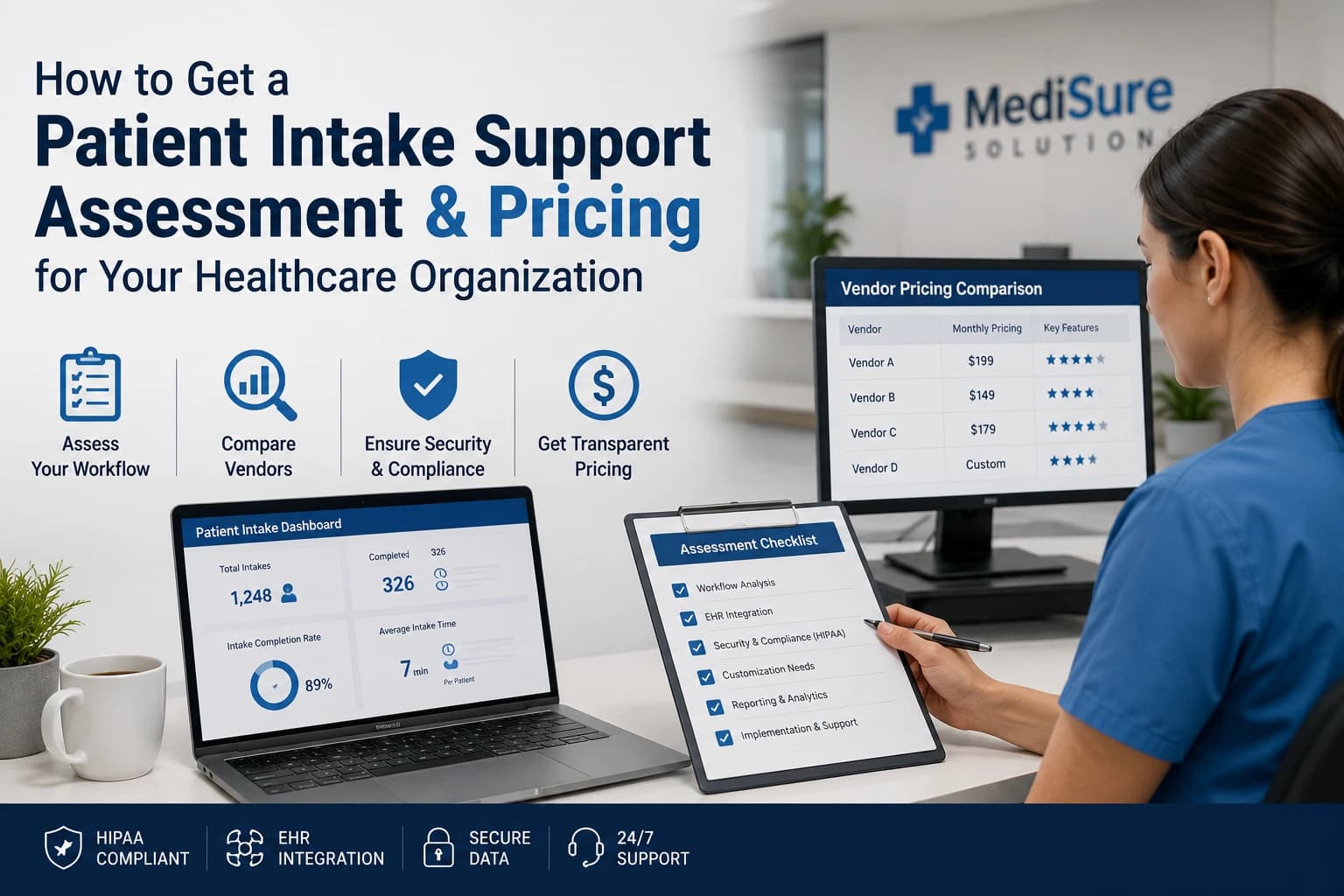
Industry estimates indicate that intake software pricing varies significantly based on organizational size and functionality requirements. Small practices often encounter pricing models beginning around $99 to $249 per month, while larger multi-provider organizations may pay between $89 and $299 monthly depending on features and integrations. Enterprise healthcare systems typically require customized vendor quotes due to complex workflows and deployment requirements (Healthcare Technology Market Estimates).
Beyond subscription costs, healthcare leaders must evaluate implementation expenses, training requirements, integration costs, workflow redesign efforts, and long-term support needs. Total Cost of Ownership (TCO) assessments should also include considerations such as recurring licensing fees, scalability requirements, and future expansion plans.
What this means for Directors of IT Operations and Healthcare Startup CTOs is that pricing comparisons should be standardized across all vendors. Organizations that evaluate TCO rather than monthly subscription fees alone are better positioned to select solutions that deliver long-term operational value and avoid unexpected costs after deployment.
MediSure Solution provides healthcare organizations with guidance on intake technology evaluations, infrastructure planning, and cost-effective implementation strategies designed to maximize long-term ROI — learn more at medisuresolution.com.
Vendor Assessments Should Prioritize Security, Compliance, and Integration Readiness
The best patient intake platform is not necessarily the one with the most features. It is the solution that aligns with organizational security, compliance, and interoperability requirements.
Healthcare organizations handle protected health information throughout the intake process, making HIPAA compliance a critical evaluation criterion. Vendors should demonstrate encryption standards, access controls, privacy protections, incident response procedures, and business continuity capabilities. Organizations should also request documentation supporting certifications, risk assessments, and security testing practices.
Equally important is integration readiness. Intake platforms should support seamless connectivity with EHR systems such as Cerner, Athenahealth, and eClinicalWorks. Interoperability capabilities leveraging standards such as HL7 FHIR, HL7 v2.x, CDA, and when applicable DICOM workflows can significantly reduce implementation complexity and improve data flow consistency.
What this means for Clinical Informatics Managers and Healthcare CIOs is that vendor assessments should extend beyond functionality. The evaluation process should include security reviews, compliance validation, integration testing requirements, and operational risk assessments. Organizations that prioritize these factors reduce implementation risk while improving long-term system reliability.
MediSure Solution helps healthcare organizations evaluate intake technology vendors through comprehensive healthcare IT assessments, integration planning, and compliance-focused infrastructure support — visit medisuresolution.com.
The Most Effective Vendor Selection Process Includes a Structured Onboarding Plan
Selecting a vendor is only one step in a successful intake modernization initiative. Organizations that achieve the strongest results typically invest equal effort into onboarding and implementation planning.
Industry best practices suggest that vendor onboarding should involve parallel procurement, compliance, and IT workstreams. Documentation reviews, contract negotiations, payment setup, security assessments, integration testing, and user provisioning should all occur through a coordinated project structure.
Organizations should also develop an onboarding checklist that includes technical configuration requirements, administrator access controls, integration testing procedures, workflow validation activities, and user training plans. Proper planning helps prevent disruptions and reduces the likelihood of creating new operational bottlenecks during implementation.
What this means for healthcare decision-makers is that implementation readiness often determines project success more than technology selection. Organizations that establish clear onboarding processes can accelerate deployment timelines while maintaining workflow continuity and compliance standards.
MediSure Solution supports healthcare organizations throughout the implementation lifecycle with 24/7 managed IT services, EHR support, server management, network management, and healthcare technology integration expertise — learn more at medisuresolution.com.
Conclusion
Healthcare IT environments are under more pressure than ever before. Administrative workloads continue to rise, patient expectations are evolving, and healthcare organizations must balance operational efficiency with security, compliance, and interoperability requirements.
Patient intake modernization is no longer simply a technology initiative. It is an operational transformation effort that affects registration workflows, EHR integration, clinical coordination, compliance management, and organizational scalability. Healthcare organizations that perform structured assessments, evaluate total cost of ownership, conduct thorough vendor reviews, and implement disciplined onboarding processes are better positioned to achieve long-term success.
The future of patient intake support will continue moving toward centralized workflows, automation, interoperability, and real-time integration with healthcare systems. Organizations that invest strategically today will be better equipped to support growth, improve workflow efficiency, and maintain operational resilience.
MediSure Solution helps hospitals, clinics, laboratories, healthcare startups, and healthcare enterprises stay operational, compliant, and ahead of downtime with 24/7 managed IT, EHR support, network management, server support, and legacy data migration services — get 24/7 support at medisuresolution.com.