When patient intake processes fail in a healthcare environment, the cost is not measured in dollars alone. Delays in registration, incomplete insurance verification, missing patient information, and scheduling bottlenecks can disrupt clinical workflows across entire organizations. For hospitals, specialty clinics, laboratories, and healthcare networks, inefficient intake operations often create operational friction long before a patient encounters a clinician.
Industry data suggests that healthcare organizations adopting digital intake workflows can significantly reduce administrative burdens by allowing patients to complete registration, consent forms, insurance verification, and health histories before arriving for appointments. Healthcare organizations are also increasingly leveraging automated reminders and digital engagement tools to reduce missed appointments and improve scheduling efficiency.
The challenge is not simply collecting patient information. It is ensuring that intake processes remain available, secure, compliant, and operational around the clock. This guide explores how 24/7 patient intake support healthcare strategies help healthcare organizations streamline workflows, reduce delays, and improve operational continuity.
Why Healthcare Organizations Are Struggling With Modern Patient Intake Demands
Healthcare organizations are under constant pressure to process more patients without increasing administrative overhead. Clinical teams expect complete and accurate patient information before appointments begin, yet many intake workflows still rely on fragmented systems, manual processes, or limited staffing coverage.
An IT Director managing multiple hospital locations cannot rely on business-hours-only support when patient registrations continue after hours through online portals and referral networks. A Clinical Informatics Manager overseeing EHR workflows must ensure patient data enters the system accurately without introducing duplicate records or compliance risks. A clinic administrator responsible for daily operations often faces staffing shortages that make manual intake processes difficult to sustain during peak periods.
The gap between patient expectations and operational reality continues to widen. Patients increasingly expect healthcare interactions to function like other digital services, allowing them to complete paperwork, verify insurance, and communicate with providers at any time. Meanwhile, healthcare organizations must maintain strict compliance requirements while ensuring seamless integration with existing EHR platforms and workflow systems.
The result is a growing need for intake operations that remain accessible, automated, and supported around the clock.
24/7 Digital Intake Eliminates Administrative Bottlenecks Before They Reach Clinical Teams
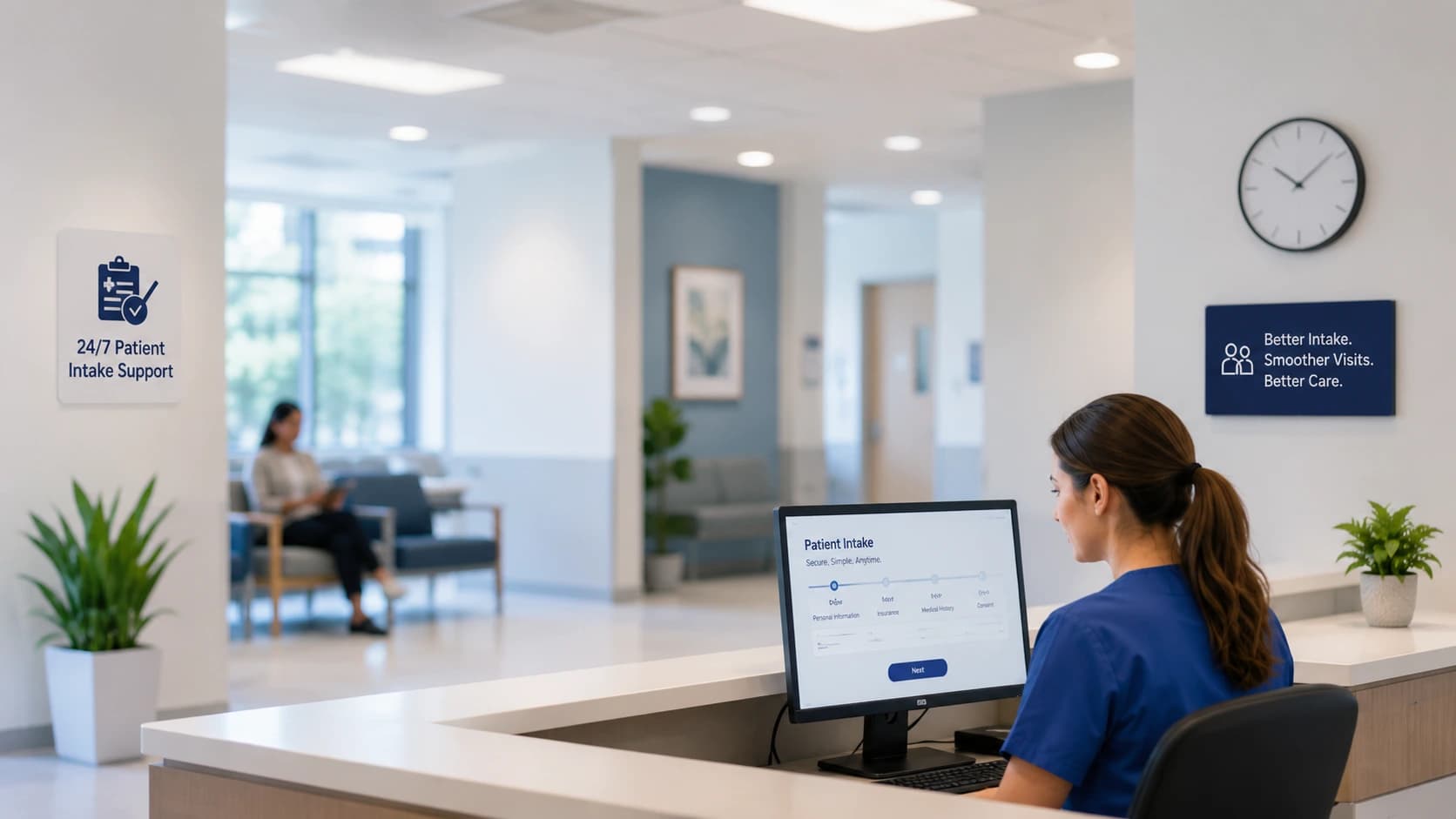
The most effective patient intake support healthcare strategies begin before the patient arrives. By enabling patients to complete registration forms, insurance verification, consent documentation, and medical histories remotely, healthcare organizations shift administrative tasks away from front-desk teams and into automated digital workflows.
Modern intake platforms integrate directly with Electronic Health Record systems, allowing demographic and clinical information to flow into patient records without requiring repetitive manual entry. This reduces administrative workload while helping maintain consistency across systems. For organizations operating multiple locations or managing high patient volumes, automation creates operational standardization that is difficult to achieve manually.
Industry estimates suggest that automated intake systems can eliminate substantial portions of manual data entry by synchronizing patient-submitted information directly into EHR environments. These systems also support validation rules that help prevent incomplete submissions while maintaining compliance requirements such as HIPAA.
What this means for Hospital IT Directors, Clinical Informatics Managers, and Healthcare CIOs is straightforward: fewer manual processes, reduced administrative burden, and improved workflow consistency across clinical operations. Instead of dedicating resources to repetitive registration tasks, organizations can focus technology investments on system performance, security, and care delivery continuity.
MediSure Solution’s 24/7 Managed IT and EHR Support services help healthcare organizations maintain uninterrupted digital intake operations and system availability across critical workflows — learn more at medisuresolution.com.
Automated Patient Registration IT Creates Faster and More Accurate Data Flows
Patient registration remains one of the most error-prone administrative functions in healthcare. Manual transcription, paper forms, and disconnected systems increase the likelihood of missing information, duplicate records, and delayed processing.
Automated patient registration IT workflows address these challenges by capturing information directly from patients through secure web portals, mobile devices, kiosks, and integrated communication channels. Data can then be transferred into EHR platforms such as Cerner, Athenahealth, and eClinicalWorks using established interoperability standards including HL7 FHIR, HL7 v2.x, and CDA where applicable.
Industry data suggests that digital intake platforms improve data accuracy through built-in validation mechanisms that identify missing or incomplete information before submission. At the same time, automated insurance card capture and eligibility verification processes help reduce administrative rework associated with denied claims and incomplete registrations.
What this means for Directors of IT Operations and Practice Administrators is greater confidence in data quality and operational efficiency. Accurate intake information supports smoother downstream workflows while reducing the time staff spend correcting records, contacting patients for missing details, or managing registration-related exceptions.
MediSure Solution helps healthcare organizations optimize patient registration IT workflows through integrated EHR support, infrastructure management, and around-the-clock technical assistance — learn more at medisuresolution.com.
Continuous Intake Support Improves Patient Throughput Without Expanding Staffing Requirements
Patient throughput is influenced by far more than clinical capacity. Registration delays, incomplete documentation, and scheduling inefficiencies frequently create bottlenecks that limit operational performance.
A 24/7 intake ecosystem ensures patients can complete required onboarding activities whenever it is convenient for them. Digital forms, electronic consents, appointment confirmations, and insurance verification processes remain available outside traditional business hours. Professional medical answering services and virtual reception teams can also assist patients with scheduling and intake questions during evenings, weekends, and holidays.
Industry estimates indicate that automated reminder workflows and continuous patient engagement programs can help reduce no-show rates by supporting appointment confirmations and rescheduling processes before visits occur. Digital intake platforms also enable patients to complete required documentation from home, reducing waiting room congestion and front-desk processing times.
What this means for healthcare executives is improved operational scalability. Organizations can accommodate growing patient volumes without proportionally increasing administrative staffing requirements. The result is more efficient workflow management and greater capacity utilization across clinical environments.
MediSure Solution’s 24/7 support teams help healthcare organizations maintain reliable intake systems, scheduling platforms, and EHR integrations that support uninterrupted patient flow — learn more at medisuresolution.com.
Centralized Intake and Workflow Automation Strengthen Enterprise Healthcare Operations
As healthcare organizations expand, fragmented intake processes become increasingly difficult to manage. Multiple referral channels, disconnected systems, and inconsistent workflows create inefficiencies that affect both operations and patient access.
Centralized intake models address these challenges by creating a coordinated entry point for referrals, registrations, and scheduling activities. Intake specialists, referral coordinators, and automated workflows work together to route patients efficiently while maintaining visibility across care pathways. Digital intake platforms further enhance these efforts by automating document collection, referral processing, and patient communications.
Industry examples show that centralized intake programs help streamline referral management and connect patients with appropriate services through secure and coordinated workflows. Modern automation platforms can also process information from digital forms, PDFs, and referral documents while updating records automatically within integrated systems.
What this means for Healthcare CIOs, Hospital Administrators, and Healthcare Startup CTOs is greater operational control. Centralized workflows improve standardization, reduce process variability, and create a stronger foundation for scalable healthcare operations. When combined with secure infrastructure and reliable EHR integration support, these systems become essential components of long-term digital transformation strategies.
MediSure Solution supports healthcare organizations with 24/7 managed IT services, EHR integration expertise, network management, and infrastructure support designed to keep mission-critical workflows operating continuously — learn more at medisuresolution.com.
Conclusion
Healthcare IT environments are under more pressure than ever before. Rising patient expectations, growing administrative complexity, evolving compliance requirements, and expanding digital health initiatives are forcing organizations to rethink how intake operations are managed.
The future of patient intake support healthcare will be increasingly automated, integrated, and continuously available. Organizations that invest in secure digital intake workflows, automated patient registration IT, centralized coordination models, and around-the-clock support capabilities will be better positioned to maintain operational efficiency while supporting care delivery continuity.
As healthcare systems continue adopting advanced interoperability standards, cloud-based platforms, workflow automation tools, and integrated EHR ecosystems, patient intake will become a strategic operational function rather than a simple administrative task.
MediSure Solution helps hospitals, clinics, laboratories, healthcare startups, and healthcare enterprises stay operational, compliant, and ahead of downtime with 24/7 managed IT, EHR support, network management, server support, and healthcare data migration services — get 24/7 support at medisuresolution.com.